
TECAR THERAPY GUIDE
What it is, how it works and when it is used
In short
- TECAR (Capacitive and Resistive Electric Transfer) is a method used by therapists to increase the thermal effect in the treated area.
- It works with high-frequency currents (about 300 kHz to 1 MHz in Winback devices), non-invasively and without direct radiation.
- It can be combined with manual therapy and exercise in the same treatment.
What is tecar therapy?
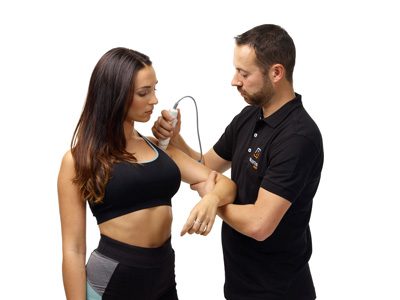
Tecar therapy, or TECAR (Transfert Électrique Capacitif et Résistif, Capacitive and Resistive Electric Transfer), is an electrotherapy method used by physiotherapists, doctors and other therapists to warm tissues from within. The device generates a high-frequency current that is conducted to the body through an active electrode and a return plate, and the tissue itself resists that current, producing localised heat.
Unlike other forms of heat, energy is not "applied" to the surface: it is the current passing through the tissue that creates the thermal effect, which makes it possible to work from superficial to deep layers.
How it works: capacitive and resistive modes
Winback, like the TECAR literature, distinguishes two transfer modes. In capacitive mode (CET) the electrode is insulated and energy acts mainly on soft tissue with more water and blood supply, such as muscle. In resistive mode (RET) the electrode is conductive and energy concentrates on higher-impedance tissue such as tendons, fascia, ligaments and joints. Winback also offers combined modes (MIX, Hi-RET, DEEPCET RET) to adapt treatment to the area and the goal.
Winback's five modes of use
Winback organises TECAR work into five modes, from the simplest to the most hands-on:
- 1.0 Basic electrotherapy: application with fixed electrodes.
- 2.0 Hands-free: the therapist is free to use other techniques while treatment runs.
- 3.0 Three-dimensional focus: energy directed at the area being treated.
- 4.0 Precision and speed: work with small electrodes on specific areas.
- 5.0 Manual therapy: the therapist uses their hands (or bracelets) as conductors, combining massage and TECAR.
Main advantages, according to Winback
- Non-invasive method, without direct radiation.
- Can be combined with manual techniques and active exercise at the same time.
- Reaches superficial and deep tissue (muscle, tendon, fascia, joint).
- Modern devices combine TECAR with other currents (Hi-TENS and Hi-EMS) in a single session.
Specific indications and treatment duration always depend on the healthcare professional's assessment.
When it is used
Winback recommends TECAR for sport (muscle and ligament injuries, tendinopathies, preparation and recovery) and for rehabilitation (post-operative care, traumatology, acute and chronic conditions, rheumatology).
Safety and contraindications
As with any medical device, there are situations in which tecar therapy must not be applied or requires precautions (for example implanted electronic devices, pregnancy over abdominal or lumbar areas, active tumours, thrombosis, fever or acute infection, altered sensation). The full list and the precautions for each device are in the manufacturer's manual and must be followed by the professional.
Frequently asked questions
What does TECAR stand for?
TECAR stands for Capacitive and Resistive Electric Transfer. It is a high-frequency electrotherapy method that warms tissue non-invasively.
Does tecar therapy involve radiation?
Winback states that energy is transmitted without direct radiation. It is a high-frequency electric current conducted through the tissue, not ionising radiation.
What is the difference between capacitive and resistive mode?
In capacitive mode energy acts mainly on soft tissue with water, such as muscle. In resistive mode it concentrates on higher-impedance tissue such as tendons, fascia and joints.
Can tecar therapy be combined with massage?
Yes. In manual therapy mode the therapist uses their hands or bracelets as conductors and combines massage with TECAR.
Which Winback devices are available?
The range includes BACK1, BACK3 TX, BACK4 and Hi-TENS by R-SHOCK, covering different needs for power, portability and currents.
Keep exploring
Want to know more or see a demonstration? Talk to the Sausport team.
Request a quote