
HUR in oncology
Strength Through Cancer Care
Preserving function, independence and quality of life throughout the cancer journey
According to HUR, exercise is not an adjunct to cancer care but an integral component. Structured strength training can be integrated into every phase of the patient’s journey to protect and restore the strength and mobility that the disease and its treatments can reduce.
Pneumatic technology allows fine, progressive loads, valuable for patients with low strength or pain sensitivity, and the SmartTouch ecosystem records each person’s progress.
- Prehabilitation
- During treatment
- Rehabilitation
- Survivorship

Technology in service of the professional
Individualised, safe and reproducible exercise
HUR’s approach rests on one principle: technology should support the work of the clinical professional, never replace it. The machines allow exercise to be delivered precisely to patients with very different profiles.
- Smooth pneumatic resistance with fine load adjustment
- Accessible equipment, including for wheelchair users
- Cardio and balance integrated in the same programme
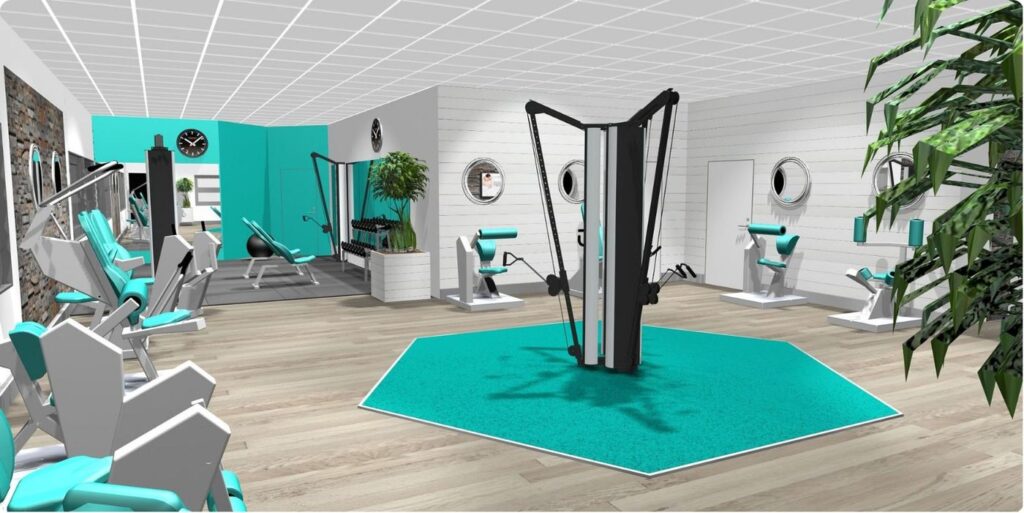
The space is part of the treatment too
Planning an exercise oncology room
HUR supports the planning of exercise rooms that encourage adherence: patient flow, sight lines for supervision and equipment accessibility, in a bright, non-institutional setting.
- 3D visualisation of the project before installation
- Layout designed for clinical supervision
- Sausport support with space planning
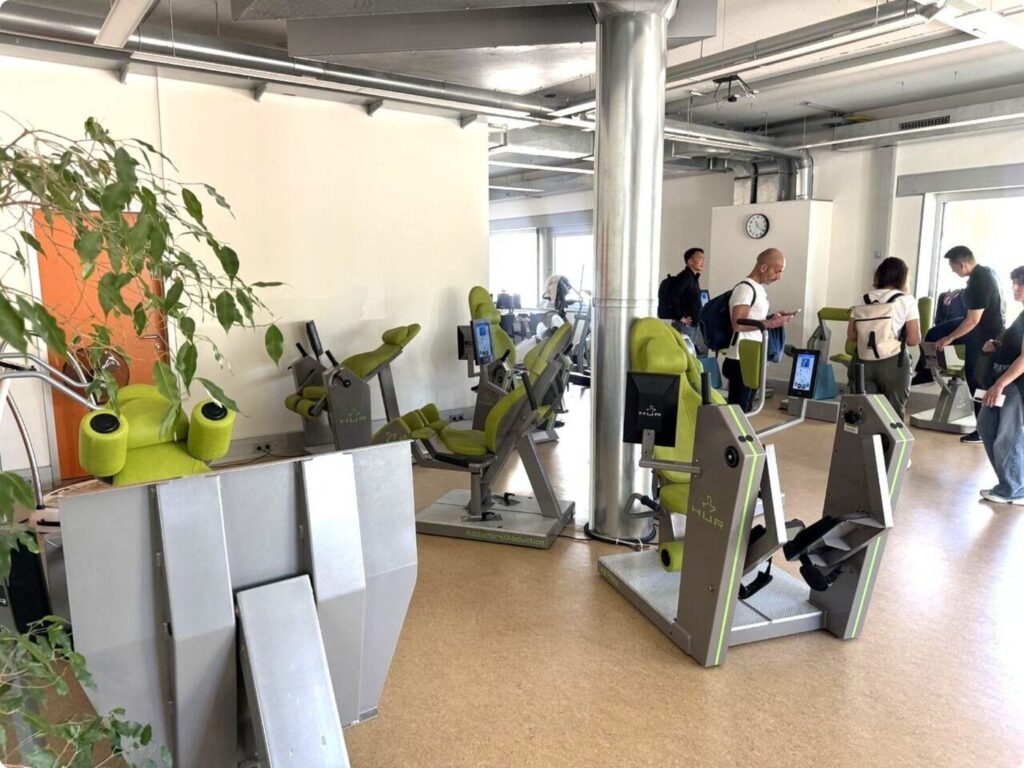
The exercise pathway in oncology
According to HUR, exercise should be individualised and adjusted to the treatment phase.
Before treatment: prehabilitation
Assess strength and functional capacity early and build physical reserve for surgery, chemotherapy or radiotherapy.
During treatment
Maintain function and adapt exercise to fatigue, symptoms and clinical status.
Rehabilitation
Restore lost strength and mobility with progressive, supervised exercise.
Survivorship
Sustain physical activity over the long term to support independence.
Clinical references with HUR equipment
Examples of institutions that, according to HUR, integrate strength training into cancer care.
NCT Heidelberg, Germany
Integrates exercise oncology research and clinical rehabilitation in a centre with HUR equipment.
Singapore Cancer Society, Singapore
A community rehabilitation centre supporting patients and survivors in regaining strength, mobility and independence.
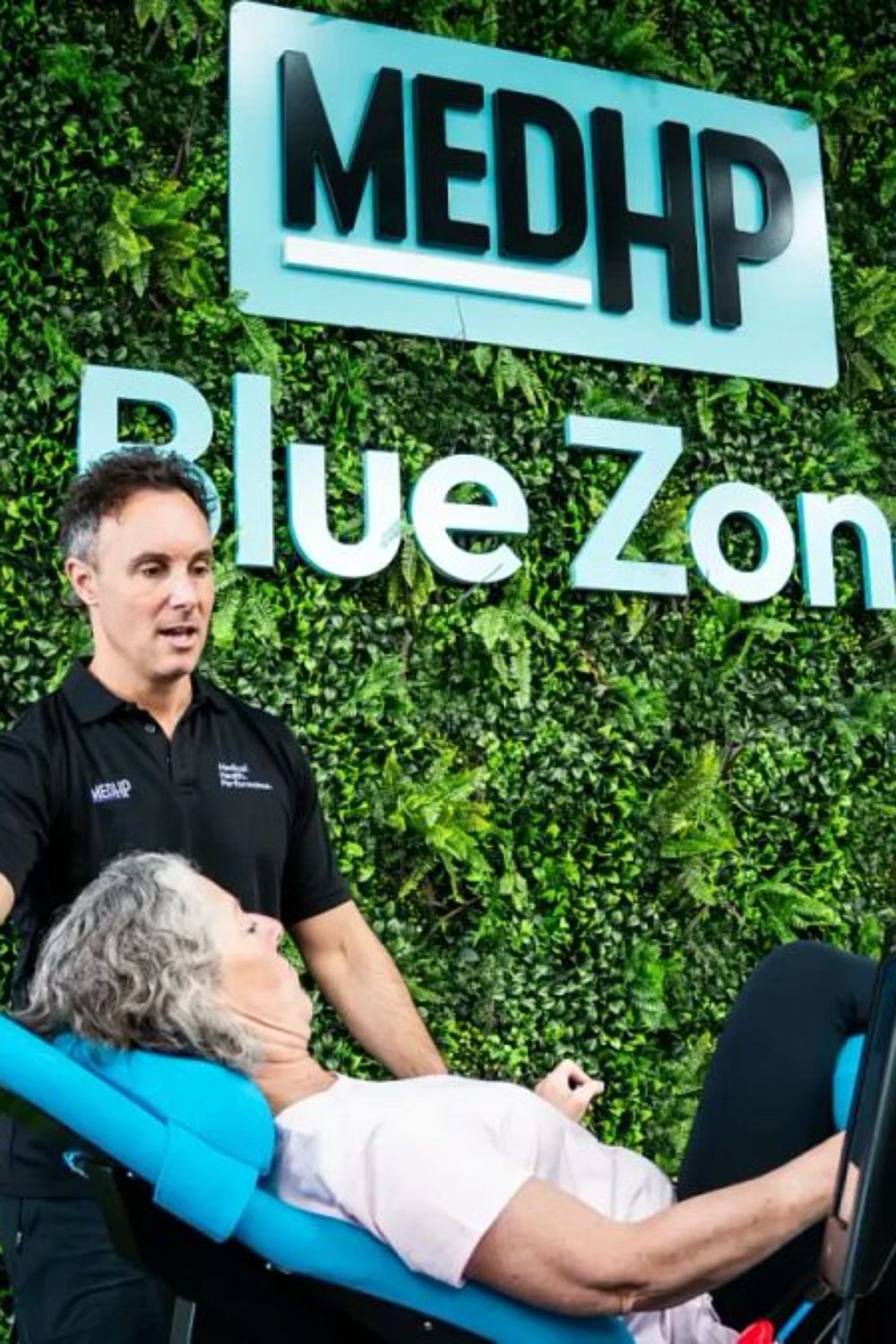
MedHP, Australia
Individualised exercise programmes supervised by exercise physiologists, during and after treatment.
National Cancer Center Hospital East, Japan
A clinical reference for strength training in cancer rehabilitation.
Exercise in oncology must be prescribed and adapted by qualified rehabilitation and exercise professionals, according to each person’s clinical status, treatment phase and functional capacity. This content is informational and is neither a clinical protocol nor a recommendation for patients.
Frequently asked questions
Why is strength training relevant in oncology?
According to HUR, progressive strength training helps preserve and restore the muscle mass and strength that cancer and its treatments can reduce, with an impact on mobility and independence.
At which stages of the journey does it apply?
Before treatment (prehabilitation), during treatment, in rehabilitation and in survivorship, always on an individual basis.
What advantages do HUR pneumatic machines offer?
The load starts close to zero and increases in small steps, so exercise can be adapted to patients with low strength or sensitivity to pain.
Who should supervise the programme?
Qualified rehabilitation and exercise professionals, working with the multidisciplinary clinical team.
How do I request information or a demonstration?
Through the contact form on the website or directly with the Sausport team.
Also on our blog
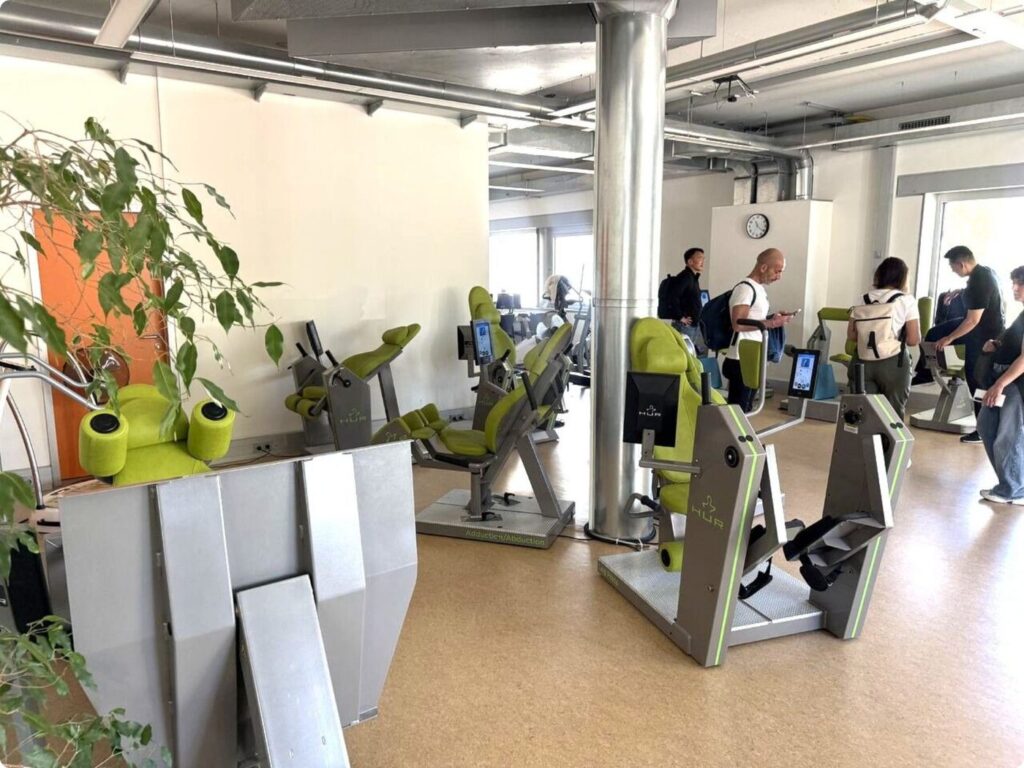
Exercise in cancer care: keeping strength before, during and after treatment
An article on why muscle strength matters during cancer treatment and how physical activity can be built into care together with the clinical team.
Read the article