
Vacusport and the athlete
Back to training and play sooner
Faster athlete recovery, after exertion and after injury
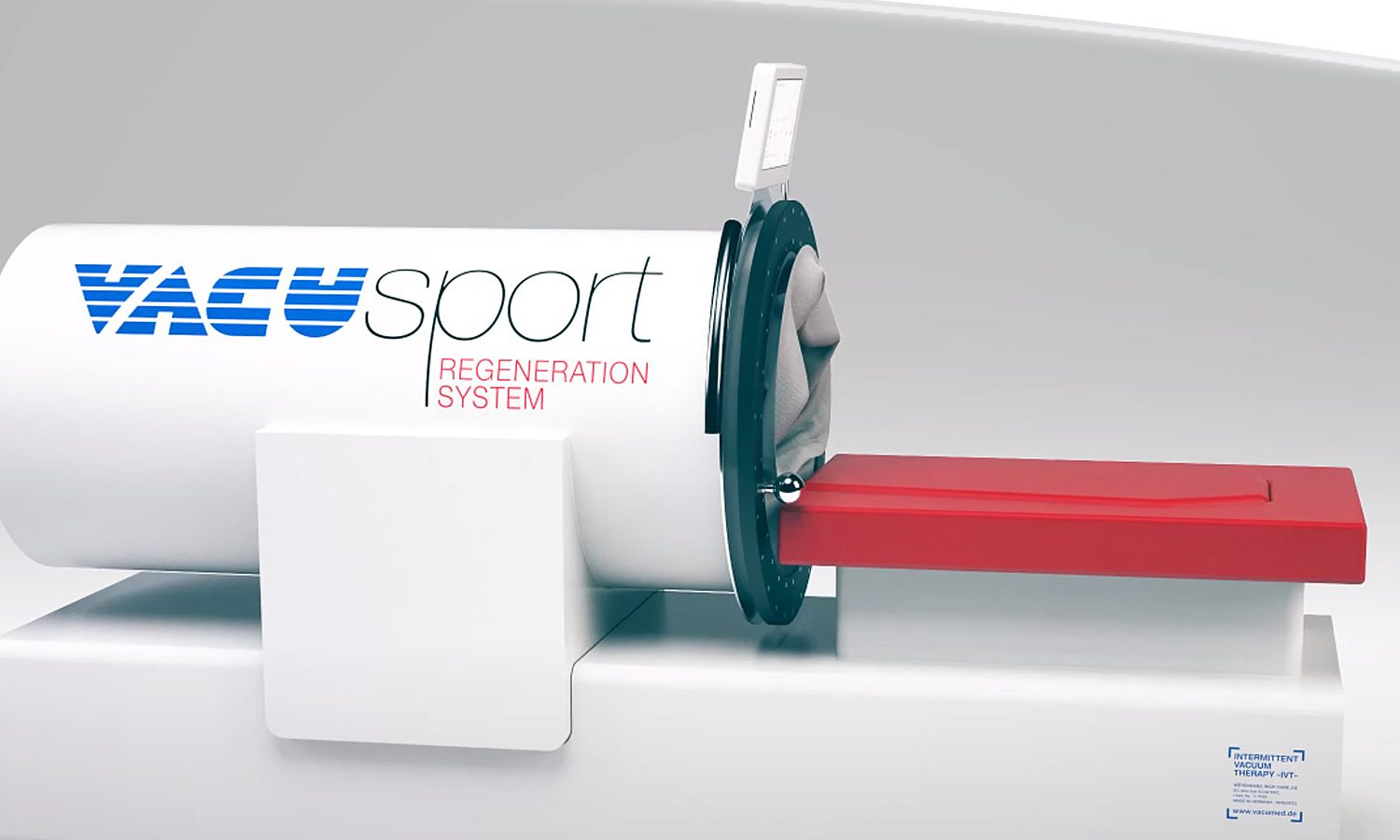
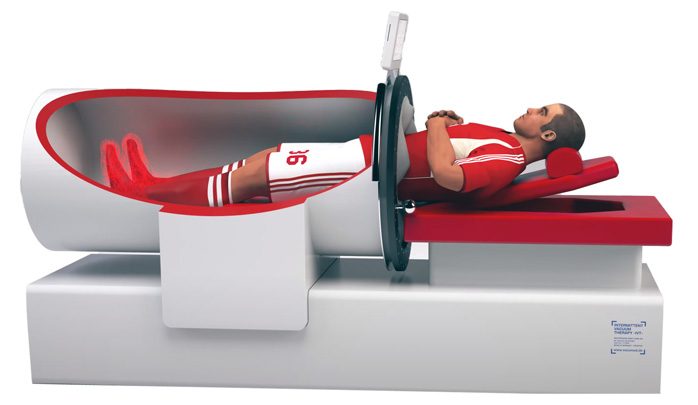
Training more means recovering better. Fatigue, muscle soreness and injuries pile up and delay form and the return to play. According to the manufacturer, Vacusport speeds up recovery by stimulating circulation and microcirculation in the legs and hips.
It is used by physiotherapy practices, rehabilitation centres and hospitals, and by elite athletes and top clubs, according to the manufacturer.
- Fatigue and DOMS
- Strains and tears
- Return to play
- Injury prevention
Regeneration after training and competition
Muscle fatigue and delayed-onset soreness (DOMS)
After exertion the muscle needs to clear metabolites and return to balance. Vacusport uses intermittent vacuum as passive vascular training to help.
- Faster reduction of lactic acid and creatine kinase (CK) after training
- Faster resumption of the next workout and maintenance of good training status
- Injury prevention and better performance through less downtime
Muscle injuries: from oedema to return to play
Strains, partial and complete tears
Right after the injury the aim is to reduce pain, oedema and haematoma and to protect capillarisation. Lymphatic drainage and circulation stimulation support intramuscular healing.
- Rapid reduction of acute pain and oedema
- Faster haematoma reduction and support for muscle healing
- According to the manufacturer, return to play (RTP) can be shortened by up to 40% in small partial tears and by 30 to 50% in moderate or subtotal tears
The 8 automatic programmes
Each programme sets pressures and times for a goal.
- 01
Programme 1 · 30 min
Regeneration after training, lactic acid reduction, relaxation.
- 02
Programme 2 · 30 min
Regeneration after training, lactic acid and CK reduction.
- 03
Programme 3 · 30 min
Athlete improvement and optimisation, before and after training.
- 04
Programme 4 · 30 min
Blood vessel conditioning and blood optimisation.
- 05
Programme 5 · 30 min
Sports injuries: tears, haematomas, strains, tendon injuries.
- 06
Programme 6 · 45 min
Sports injuries: fractures, ligament problems.
- 07
Programme 7 · 30 min
Wound and abrasion healing.
- 08
Programme 8 · 20 min
Spinal traction, with the legs at an angle.
Indicative protocols by type of injury
| Muscle fatigue | 10 to 15 sessions of 30 min, twice a day |
|---|---|
| Delayed-onset muscle soreness (DOMS) | 5 sessions of 30 min, daily |
| Neuromuscular low-back pain (traction) | 10 to 15 sessions of 30 min, 3 times a week |
| Muscle strain | 15 to 20 sessions of 30 min, 3 to 5 times a week |
| Small partial tear | 20 to 25 sessions of 30 min, at least 3 to 5 times a week |
| Moderate partial tear | 20 to 25 sessions of 30 min, daily, at least 5 a week |
| Subtotal or complete tear | 25 to 30 sessions of 30 min, daily, at least 5 a week |
Indicative protocols from the manufacturer. Each patient's plan is defined by the healthcare professional.
Frequently asked questions
Does Vacusport reduce time to return to play?
According to the manufacturer, return-to-play time can be up to 40% shorter in small partial tears and 30 to 50% shorter in moderate or subtotal tears. The result depends on each athlete and injury.
When should it be used after training or a match?
Programmes 1 and 2 are for regeneration after exertion, with 30-minute sessions. It can also be used before training (programme 3).
Does the athlete need supervision during the session?
According to the manufacturer, no therapist intervention is needed during the session, which runs on an automatic programme.