
Desmotec
Flywheel training with data on every repetition

Desmotec: an Italian company making flywheel training equipment since 2012, in Biella. The resistance comes from a flywheel and the effort of the person training, and devices with electronics show force, power and speed on every repetition. Sausport supplies Desmotec with its own technical support.
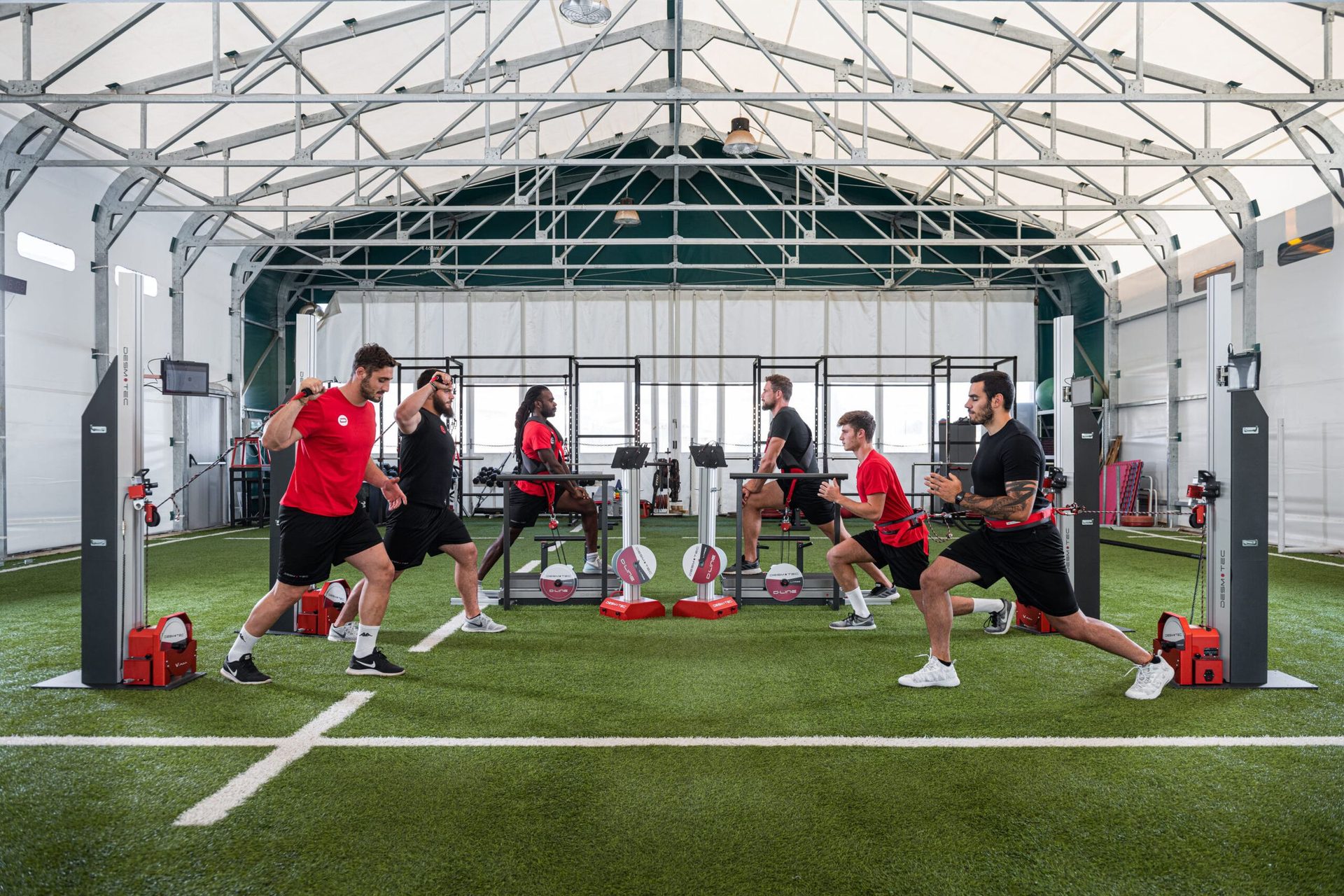
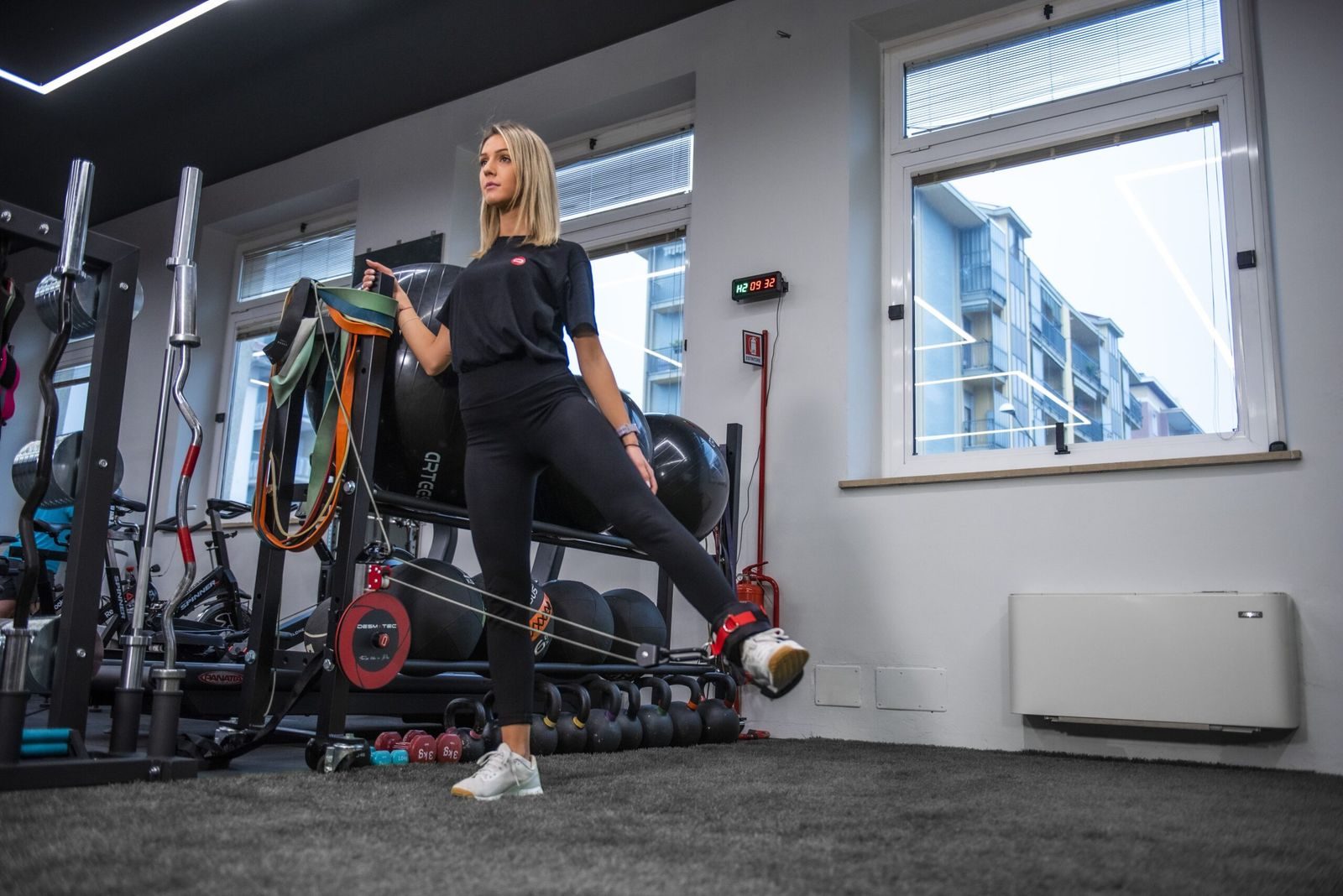
What problems Desmotec flywheel training solves
Five reasons why clinics, teams and gyms choose Desmotec devices, according to the manufacturer.
- 01
Strength without plates or weight stacks
The resistance is the effort of the person training. There are no weights to choose, load or unload between sets: the feel of the load is adjusted by changing the disc.
- 02
Eccentric work you can dose
The athlete controls the eccentric load with how hard they pull and how quickly they brake. Heavier discs favour force, lighter discs favour speed.
- 03
Numbers on every repetition
On devices with electronics, force, power and speed show on every repetition, on the 10–11″ tablet (D.SOFT) or in the Desmotec Connect app (V.MINI). One session is compared with the last.
- 04
One device for every level
The harder you pull, the more energy the flywheel stores to give back. The same device serves a first session and an experienced athlete, and a patient can start as low as needed.
- 05
Fits where you train
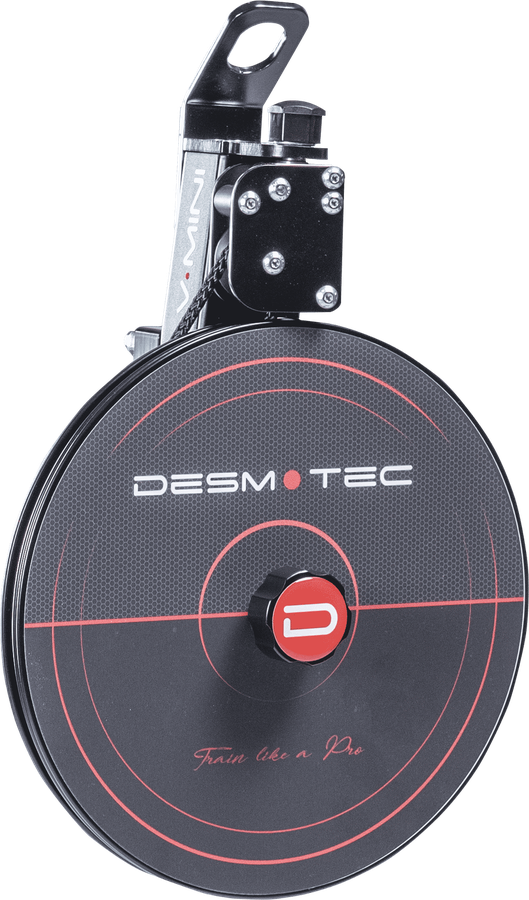
V.MINI fixes to wall bars, a rack, a post or a goalpost and comes off again; the D.LINE platforms stand on the floor; the V.LINE stations need only their own footprint.
Desmotec in numbers
Figures stated by the manufacturer.
How flywheel training works
Four steps, as described by the manufacturer.
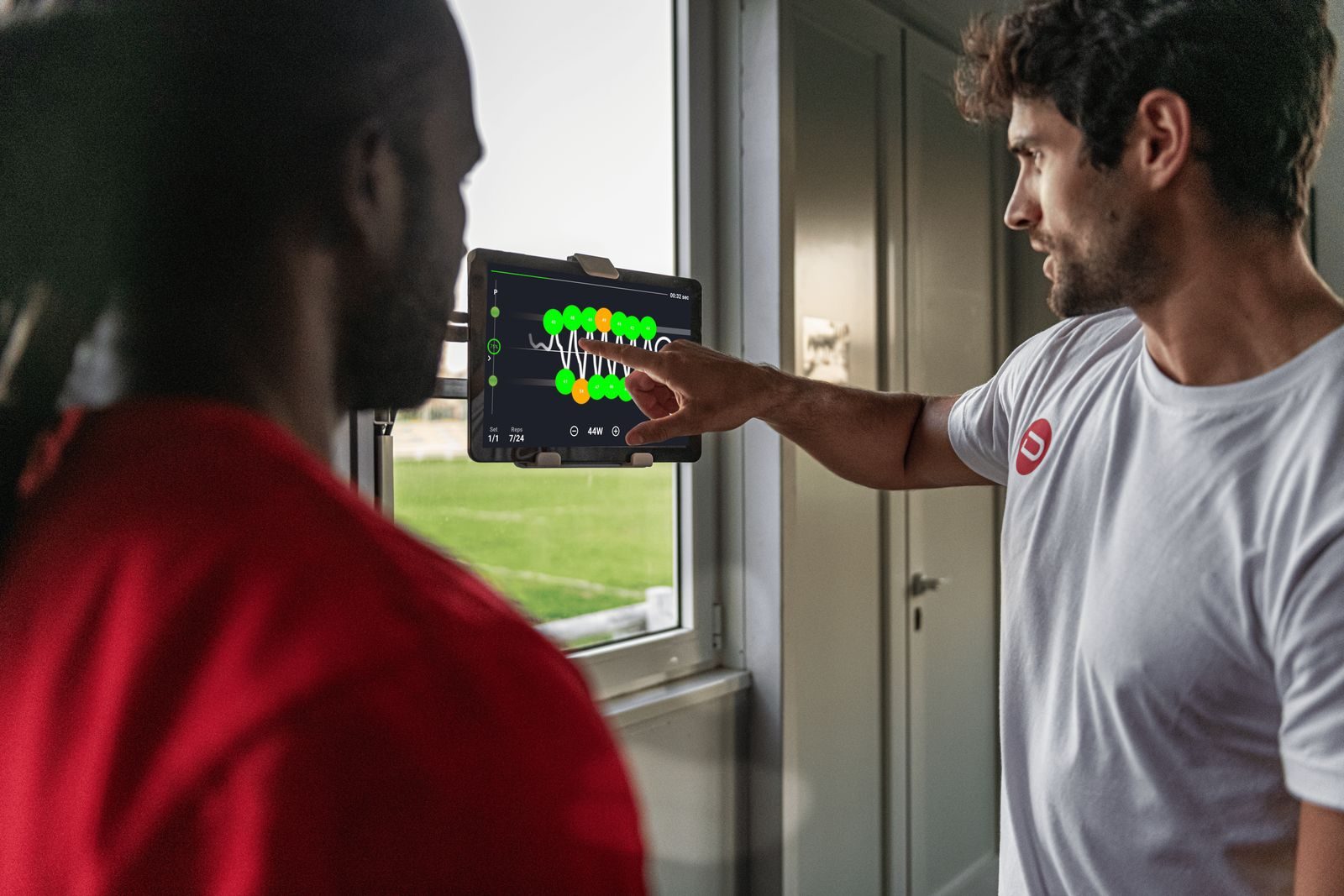
A coach and an athlete reviewing training data.
- You pull and the flywheel acceleratesThe effort of the person training is stored as energy in the flywheel: pulling harder stores more energy.
- You brake on the way backThe returning energy is controlled by the person training: both phases of the movement are loaded, concentric and eccentric.
- You change the discHeavier discs favour force and lighter discs favour speed. There are no weights to load.
- You see the numbersWith electronics, force, power and speed for every repetition show on the tablet or phone.
Who it is for
The three settings Desmotec identifies among its users.
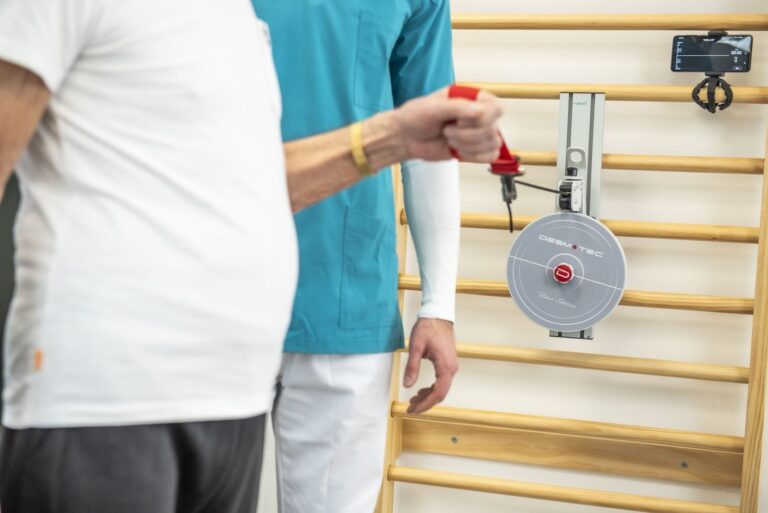
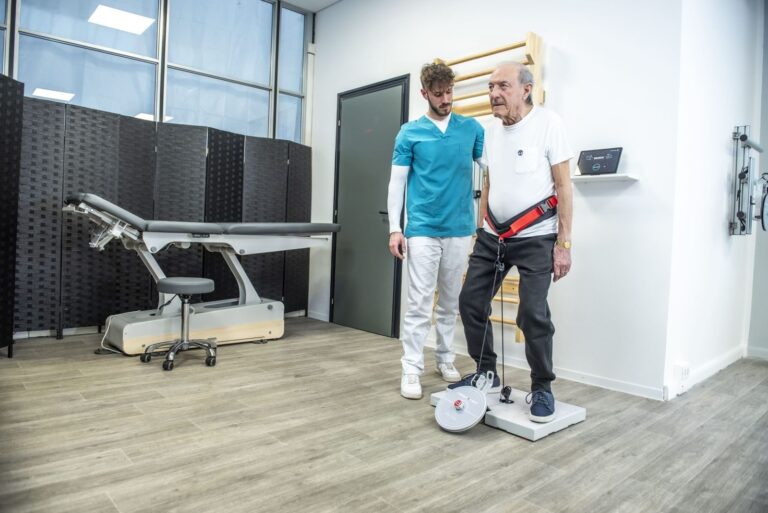
Physiotherapy and clinics
Flywheel exercise and movement assessment, with the MED edition.
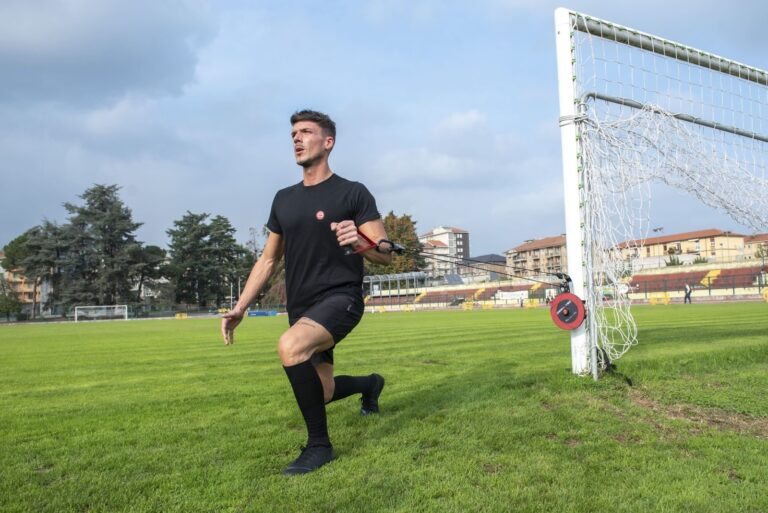
Sports teams
Eccentric strength and power, measured, on the pitch and in the weights room.
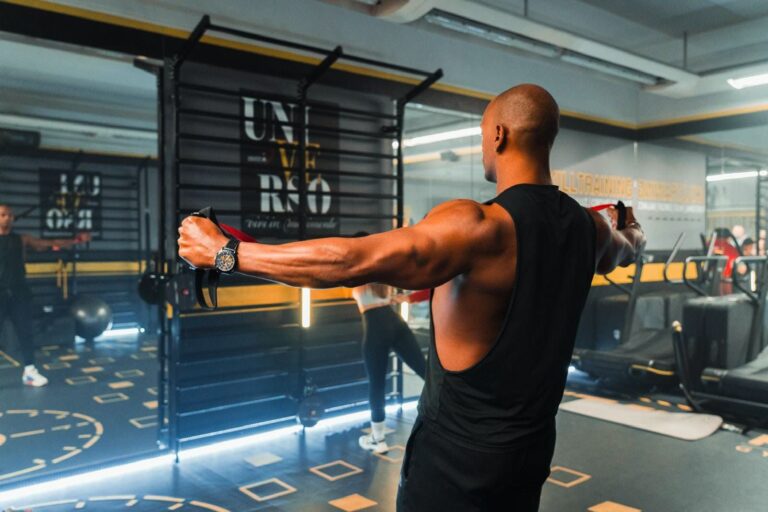
Gyms and personal trainers
Strength training without plates, for every level, alone or in small groups.
Movement assessment
E.LINE platforms for force and balance tests.
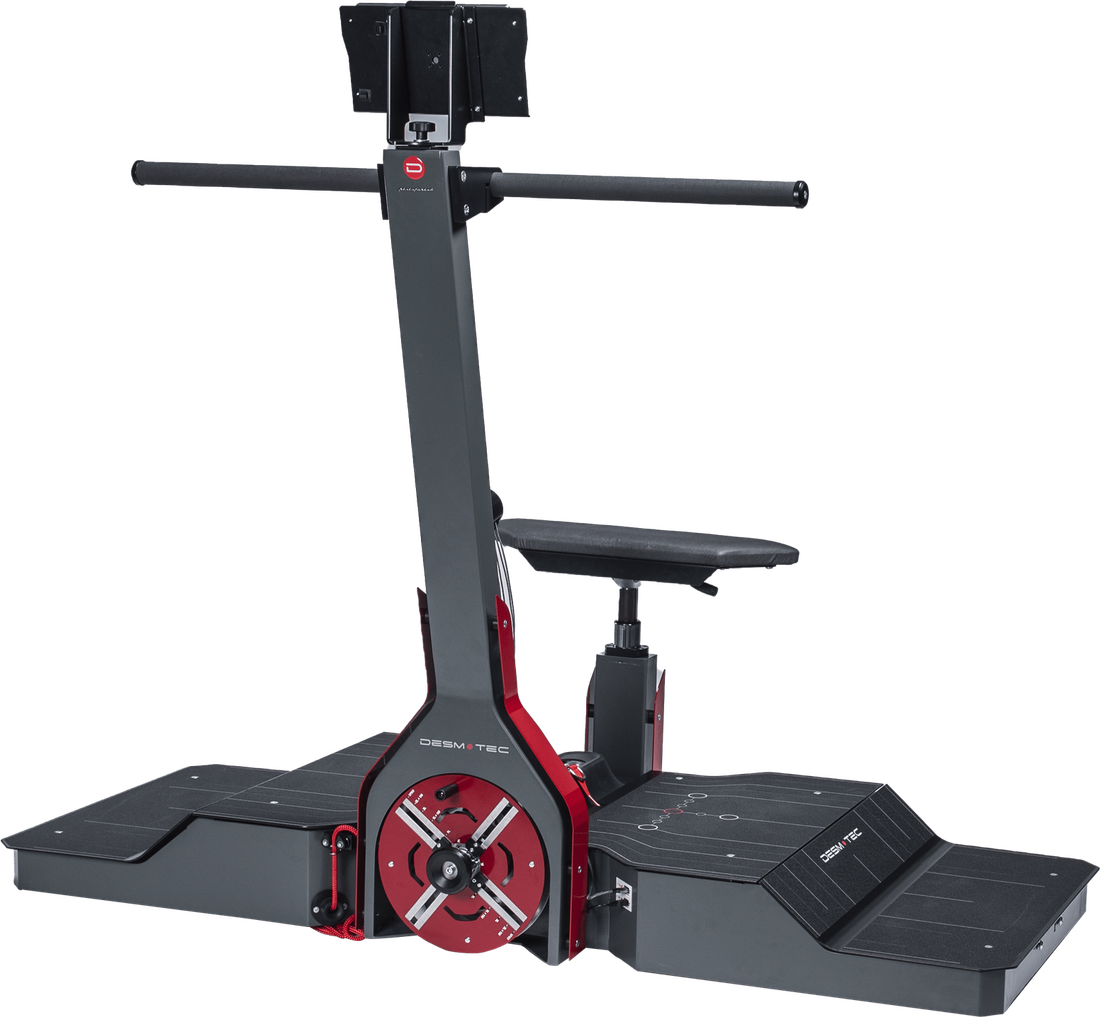
Choose the device
The full range and the portable V.MINI, to start with.
At a glance
| Manufacturer | Desmotec S.r.l., Biella (Italy), since 2012 |
|---|---|
| Technology | Flywheel (isoinertial) training, with concentric and eccentric phases |
| Lines | V.LINE (V.MINI, V.FULL, V.PLUS), D.LINE (D.BLACK, D.FULL, D.PLUS), E.LINE (E.BOARD LARGE, E.MINI MED) |
| Feedback | Force, power and speed on every repetition: D.SOFT (10–11″ tablet) or the Desmotec Connect app (V.MINI) |
| MED editions | V.MINI MED and E.MINI MED, for clinics and physiotherapy practices |
| For | Physiotherapy clinics, sports teams, gyms and personal trainers |
| Supply and support | Supplied by Sausport, with Sausport technical support |
Frequently asked questions
What is flywheel (isoinertial) training?
It is training where the resistance comes not from weights but from a spinning flywheel. You pull, the flywheel accelerates and stores energy, and the person training controls the energy that returns. Both phases of the movement are loaded, the concentric and the eccentric.
How is it different from training with weights?
There are no weights to load. Each person meets a resistance equal to the effort they put in, and the feel of the load changes by changing the disc. That is why the same device serves a first session and an experienced lifter.
Which device should I choose?
It depends on the space and the goal: V.MINI is portable and fixes to a fixed point; the V.FULL and V.PLUS stations work the whole body; the D.BLACK, D.FULL and D.PLUS platforms focus on the lower body; the E.BOARD LARGE and E.MINI MED platforms assess force and balance. The Sausport team helps you choose.
What is D.SOFT?
It is the Desmotec software that shows force, power and speed for every repetition, on a 10–11″ tablet that comes with the device. It is included for five years with the V.PLUS, D.PLUS and E.MINI MED; on the other compatible models the licence is sold separately. V.MINI uses the Desmotec Connect app.
Are the MED devices medical devices?
Desmotec states that the V.MINI MED and E.MINI MED are certified medical devices, for use in clinics and physiotherapy practices. Ask Sausport for the documentation that applies to your case.
Is there a learning curve?
Yes, a short one. Timing the brake takes practice and most people need two or three sessions. Start with a light disc and moderate effort and build volume up over the first weeks.
How much does it cost and who provides support?
The cost depends on the device, the configuration and the software. Request a quote from Sausport, with no obligation. Units are ordered from the manufacturer, usually in under 10 days, and technical support is provided by the Sausport team.
Learn more about Desmotec
The full range, the portable V.MINI and one page for each profile: clinics, sports teams and gyms.
 Device rangeV.LINE, D.LINE and E.LINE: from the V.MINI to the assessment platforms.
 V.MINIThe portable device that fixes to a wall, rack or goalpost.
 Physiotherapy and clinicsMED editions for exercise and movement assessment.
 Sports teamsEccentric strength and power where the team trains.
 Gyms and personal trainersStrength without plates, for every level and small groups.