
Vacumed in venous insufficiency
Oedema, lymphoedema and venous ulcers
Less oedema and lighter legs in chronic venous insufficiency
When the vein valves fail, blood pools in the legs and fluid builds up in the tissues: swelling, heaviness, skin changes and ulcers appear. The same happens when lymphatic drainage is impaired.
According to the manufacturer, alternating vacuum and normal pressure works as vascular training: it increases venous and lymphatic return and improves microcirculation, which supports fluid removal and ulcer treatment.
- Chronic venous insufficiency
- Oedema and lymphoedema
- Venous ulcers
- Post-operative
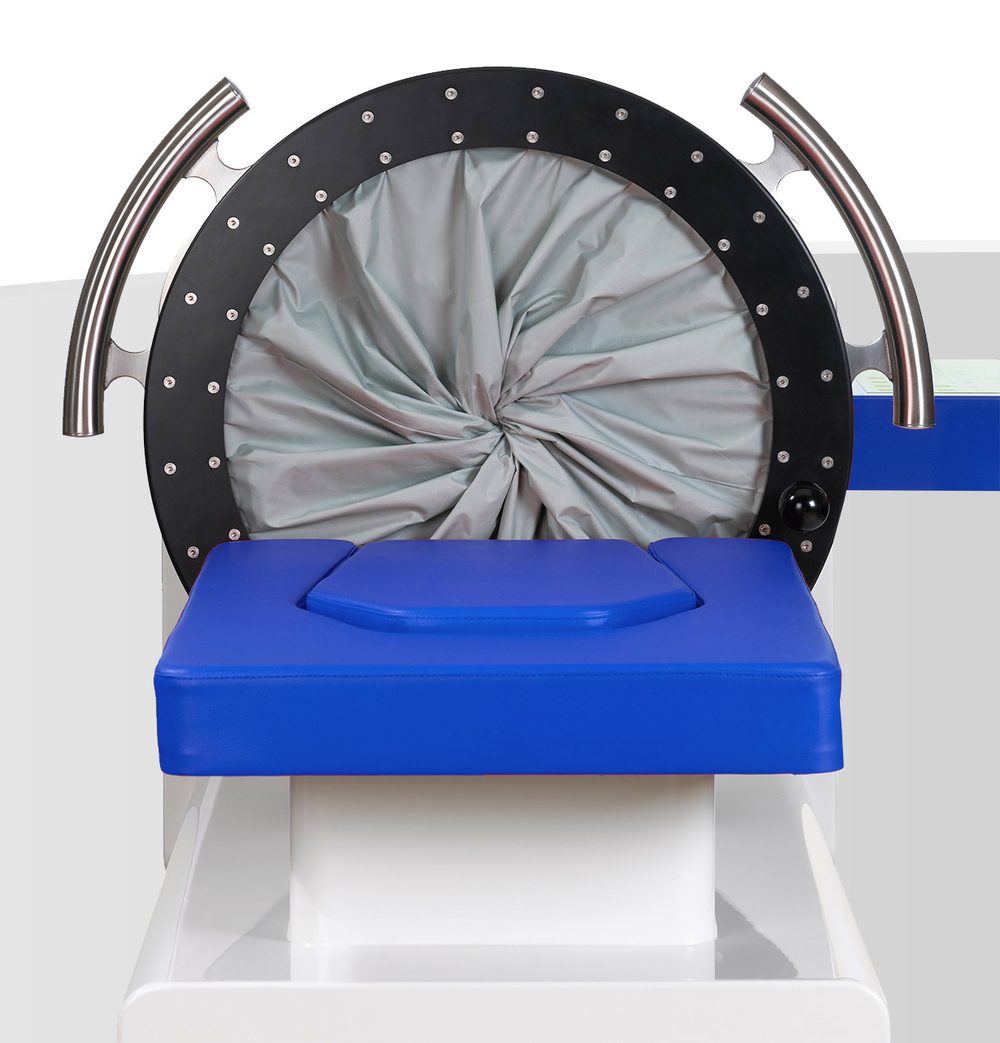
Venous insufficiency and post-thrombotic syndrome
From stage C2 to C6 (CEAP)
The vacuum phase dilates the vessels and stimulates the reabsorption of interstitial fluid. The normal-pressure phase contracts them and helps drain fluid through the veins and the lymphatic system.
- Less heaviness and swelling in the legs
- More oxygen and nutrients in the tissues, important in venous and mixed ulcers
- Less pain, tension and tiredness in the legs

Oedema, lymphoedema and post-operative care
Venous, lymphatic and post-traumatic
The manufacturer indicates Vacumed for lymphoedema, mainly of secondary origin, phlebo-lymphatic oedema, post-operative or post-traumatic swelling and lipoedema.
- Activation of the venous and lymphatic systems for more efficient fluid removal
- A pleasant, painless therapy suited to chronic conditions
- Long-term benefit: training of vessel elasticity and function
Indications presented by the manufacturer
List of Vacumed's venous and lymphatic indications.
- 01
Chronic venous insufficiency
CEAP stages C2 to C6.
- 02
Post-thrombotic syndrome
Reduction of oedema and symptoms.
- 03
Venous and mixed ulcers
Support for healing through better oxygenation.
- 04
Lymphoedema and phlebo-lymphatic oedema
Mainly of secondary origin.
Frequently asked questions
Does Vacumed help in lymphoedema?
The manufacturer indicates it for lymphoedema, mainly secondary, and for phlebo-lymphatic oedema: the pressure alternation activates venous and lymphatic return.
Can it be used in patients with venous ulcers?
Yes, according to the manufacturer, as long as there is no infection in the application area. It fits in with usual wound care and compression.
When should it not be used?
In case of recent phlebothrombosis or risk of thromboembolism, infected wounds in the application area, pregnancy, joint hernia and hypotension with a tendency to collapse.