
Peripheral magnetic stimulation: how it works
Magnetic fields that induce current in the tissue, contact-free
What is peripheral magnetic stimulation
Peripheral magnetic stimulation (PMS), also called rPMS (repetitive peripheral magnetic stimulation) or super inductive technology, is a non-invasive technique that applies high-intensity magnetic fields to nerves and muscles.
The magnetic field passes through clothing and, by electromagnetic induction, generates a current inside the tissue. That current activates motor and sensory fibres and makes it possible to modulate pain and facilitate motor control.
- Non-invasive
- Contact-free
- Electromagnetic induction
- Deep tissue
Main effects described
According to MagRex, summarised for clinical practice.
Analgesia and pain modulation
Acts on pain transmission and supports peripheral neuromodulation, in acute, chronic and neuropathic pain.
Muscle activation
Can activate motor fibres and improve neuromuscular recruitment, useful in readaptation and in inhibited muscle chains.
Spasticity and function
In neurorehabilitation, it is used to modulate spasticity, combined with functional exercise.
Trophic effect
Electromagnetic fields can modulate perfusion and trophic processes, as support within a treatment plan.
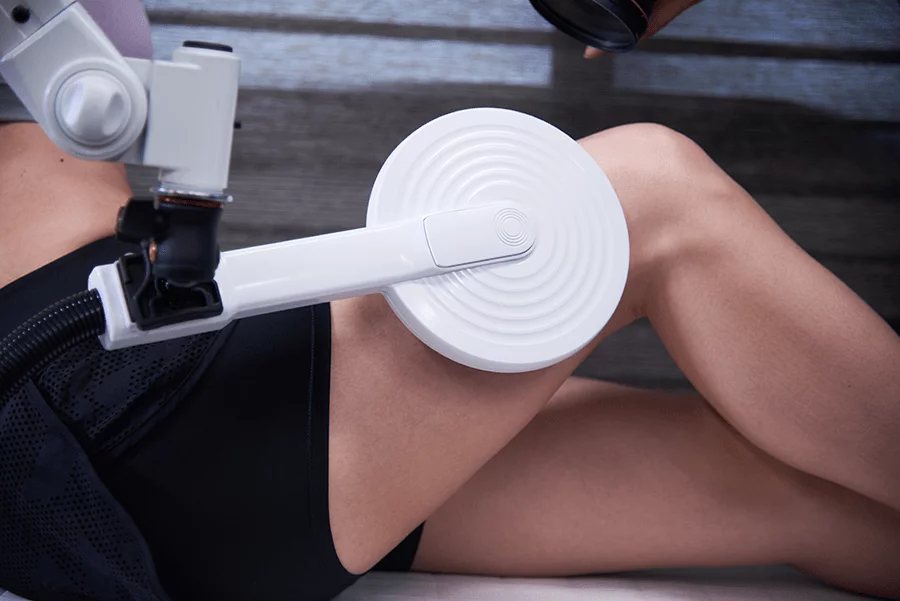
Without skin resistance
PMS compared with conventional electrotherapy
In electrode-based electrotherapy, the current has to cross the skin. In PMS, the magnetic field induces the current directly in the tissue, with no electrodes and no surface burning sensation. According to the brand, this reaches greater depth with more comfort.
- No electrodes or consumables
- Applied with the patient clothed
- Greater depth of action
- Fewer limits than surface application
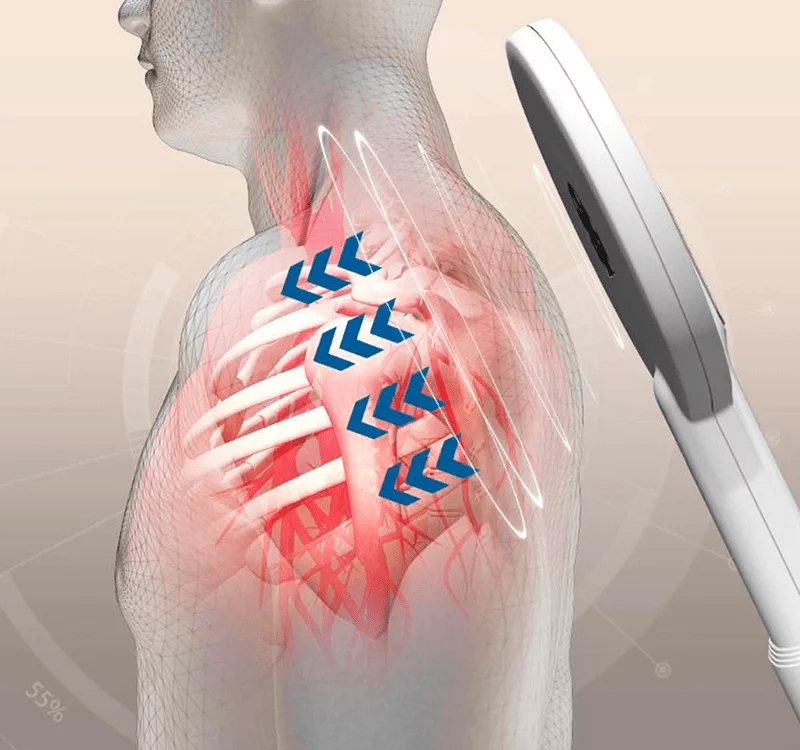
High intensity, not conventional magnetotherapy
SIS/PMS compared with low-power PEMF
Conventional magnetotherapy (low-power PEMF) works at much lower intensities and aims mainly at biological and trophic effects. Super inductive technology uses high-intensity fields in the tesla range, which allow neuromodulation and induced contraction with an immediate effect on pain and function.
- Intensities in the tesla range
- Neuromodulation and muscle contraction
- Contact-free application
- Greater effective depth
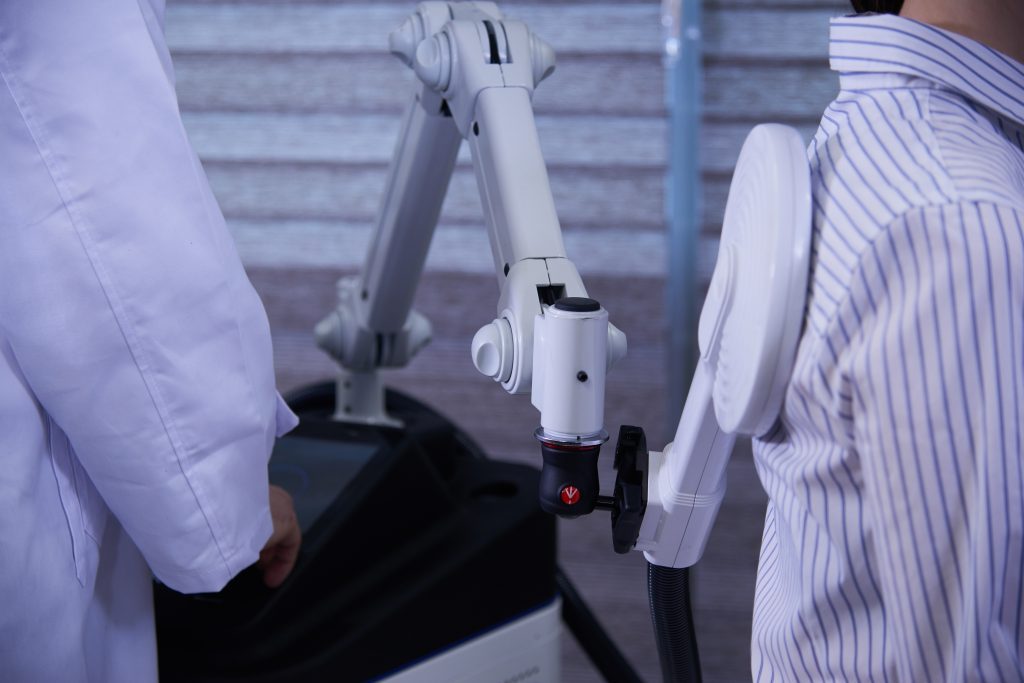
BURST protocols: iTBS and cTBS
High and low frequencies combined
The iTBS (intermittent, facilitatory aim) and cTBS (continuous, inhibitory aim) patterns let you choose the stimulus according to the therapeutic target. The device also includes LTD burst, LTP burst and Burst. According to MagRex, BURST currents combine effective pain modulation with powerful, well-tolerated muscle activation.
- iTBS: intermittent pattern
- cTBS: continuous pattern
- LTD burst · LTP burst · Burst
- Parameters adjustable per programme
Safety and screening
- Review the medical history and implanted devices (for example pacemakers).
- Assess ferromagnetic material in the application area.
- Pregnancy and epilepsy: assess according to clinical judgement.
- Application is contact-free, with constant monitoring of the patient’s sensation.
- Increase intensity progressively.
General information, not a substitute for medical advice. The indication, parameters and frequency of sessions are set by the health professional, case by case.
Frequently asked questions
What is peripheral magnetic stimulation?
A non-invasive technique that applies high-intensity magnetic fields to nerves and muscles to induce currents in the tissue, modulate pain and facilitate motor control.
How does it differ from conventional magnetotherapy?
Conventional magnetotherapy uses low-power fields with mainly trophic aims. PMS uses high-intensity fields in the tesla range, which allow neuromodulation and induced contraction.
How does it differ from electrotherapy?
According to the brand, there is no skin resistance and no electrodes: the magnetic field induces the current directly in the tissue, at greater depth.
What do iTBS and cTBS mean?
iTBS is an intermittent pattern with a facilitatory aim. cTBS is a continuous pattern, oriented to inhibition. The professional chooses according to the therapeutic target.
Can it be combined with other therapies?
Yes. It is usually combined with manual therapy, therapeutic exercise and education to boost results.
How many sessions are needed?
It depends on the goal. In practice, progressive cycles are used, with intensity adjustment and periodic reassessment.