

Muscle decompression: what it is, how it works and when to use it
Sausport Blog
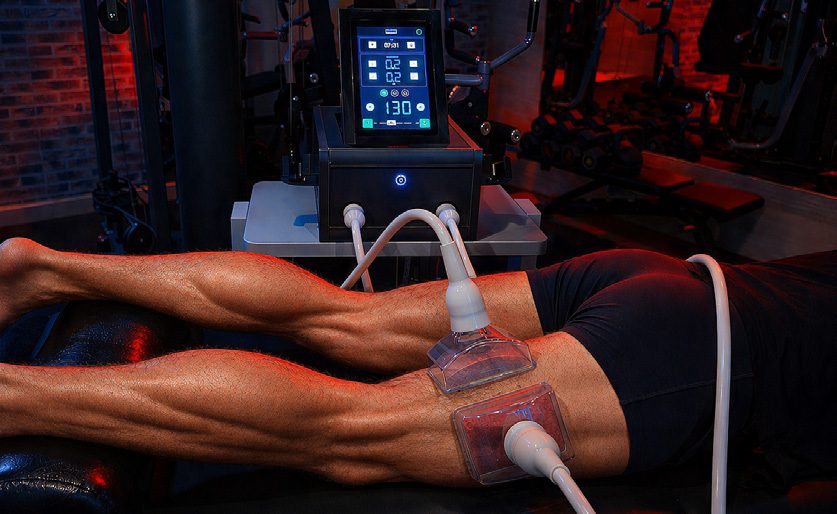
Muscle decompression is a technique that applies pulsed negative pressure to the muscle and its fascia, in cycles of decompression and rest, to promote muscle relaxation and comfort. It is the concept behind the MD3 device from Muscle Decompression.
This guide shows how it works, where it can fit into muscle recovery and mobility work, and how the MD3 lets you adapt the treatment to each muscle and each person.

In short
- Muscle decompression uses pulsed negative pressure, not continuous suction, with adjustable parameters.
- The MD3 offers 30 to 600 mbar, three preset 10-minute programs and eight applicator types.
- According to the brand, the treatment is pain-free and does not cause bruising.
- It can fit into recovery from muscle fatigue, relaxation of deep muscles and mobility work.
- According to the brand, it is used by strength and conditioning coaches, sports teams and physiotherapists.
After an intense session
An athlete with fatigue in the quadriceps and hamstrings.
- How to use it
- A recovery programme with the right applicator, set by the professional.
- Duration and frequency
- Preset 10-minute programs; the number of sessions is set by the professional.
A very tense deep muscle
Tension in the piriformis or quadratus lumborum.
- How to use it
- A muscle-specific protocol, with the right applicator and pressure.
- Duration and frequency
- According to the protocol and the person’s response.
Stiffness before a training session
Limited mobility in the hip or shoulder.
- How to use it
- Mobility work integrated into the warm-up, with parameters set by the professional.
- Duration and frequency
- A short session, according to the training plan.
A person sensitive to manual pressure
Muscles sore to the touch that make manual therapy difficult.
- How to use it
- Adjustable, comfortable pulsed negative pressure, according to the brand.
- Duration and frequency
- Gradual progression, set with the therapist.
What is muscle decompression?
According to Muscle Decompression, it is a concept that brings together a technology (the MD3), a methodology (parameters, applicators and protocols by muscle) and training. The principle is that an overactive muscle stays contracted, under compression, and that the opposite stimulus, decompression, can lead to relaxation.
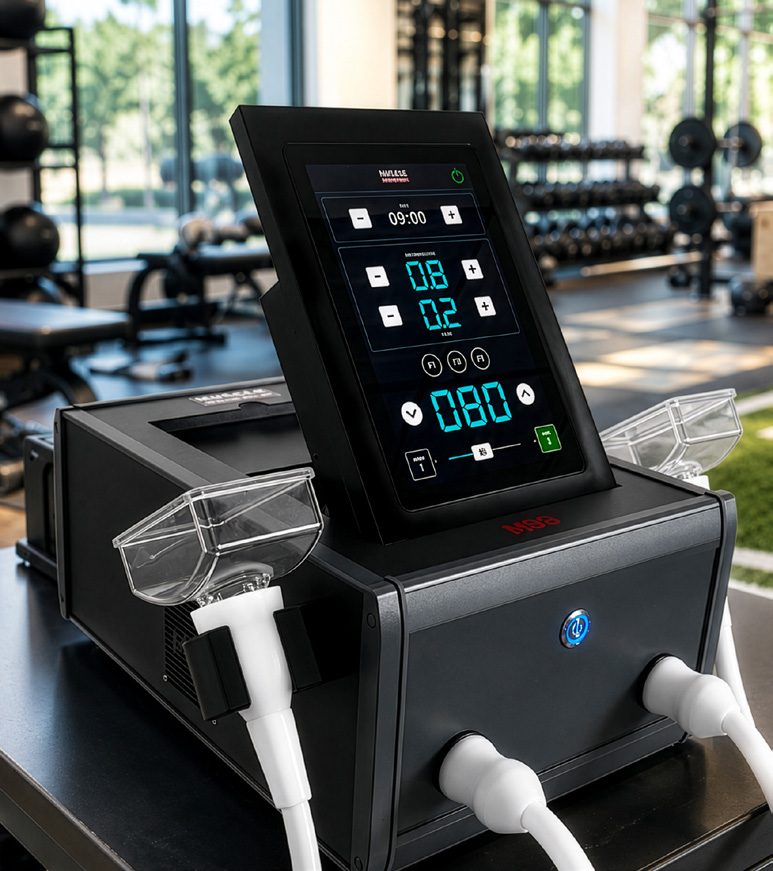
Unlike continuous suction, the application is pulsed: a decompression phase followed by rest, adjusted to each muscle. On the MD3 you adjust pressure (30 to 600 mbar), decompression and rest times (0.1 to 10 seconds) and duration.
How does the MD3 work?
The MD3 applies decompression through applicators placed over the muscle. You adjust the pressure (30 to 600 mbar), the decompression and rest times (0.1 to 10 seconds) and the duration, and there are three preset 10-minute programs. There are eight applicator types, to adapt the treatment to the area and the muscle.
The muscle-by-muscle protocols defined by the brand help make the application reproducible from session to session.
Where can it help?
According to the brand, muscle decompression can fit into recovery from muscle fatigue after training or competition, relaxation of deep muscles such as the piriformis, the suboccipitals or the quadratus lumborum, and work on mobility, range of motion and fascia.
Results depend on each person and on the protocol, and the plan should be set with a professional.
How does it compare with cupping?
Both use negative pressure, but, according to the manufacturer, the MD3 stands out for pulsed application, force control and muscle-by-muscle protocols, aiming to work deeper muscles, pain-free and without bruising. See the full table on the muscle decompression vs. cupping page.
Safety and restrictions on use
According to the manual, the MD3 must not be used:
- Over open wounds, damaged skin, or areas with infection, inflammation or visible skin conditions.
- On areas with excessive skin sensitivity or recent injuries.
- On areas with implanted electronic devices, such as pacemakers.
- In the presence of acute hernias or in adjacent areas.
- Over the abdomen immediately after eating or drinking.
- On areas where creams, oils or other substances have been applied.
Use is not recommended:
- During pregnancy, especially over the abdominal and lower back regions.
- In people with severe circulatory disorders or cardiovascular disease.
- In people with capillary fragility or taking anticoagulants.
- In people with altered sensation that prevents them from perceiving discomfort or pain.
- In minors.
Stop immediately if pain, intense discomfort or any adverse reaction occurs. Always consult the full manual.
When to talk to a professional
- If you have persistent pain, loss of strength or limited movement.
- If you have any of the restrictions on use in the manual (damaged skin, pacemaker, anticoagulation, pregnancy, among others).
- If discomfort during or after treatment is intense.
Discover the MD3
The Muscle Decompression device and methodology, at Sausport.
Frequently asked questions
Is muscle decompression the same as cupping?
According to the manufacturer, no: both use negative pressure, but the MD3 applies pulsed cycles with force control and a defined methodology.
What is muscle decompression used for?
The brand mentions recovery from muscle fatigue, muscle relaxation and work on mobility and fascia, always as part of a plan set by a professional.
How long does an MD3 treatment last?
The three preset programs last 10 minutes, and the duration can be adjusted.
Is it painful?
The brand describes it as comfortable and pain-free. Stop if you feel pain or intense discomfort.
Who can use the MD3?
Adults familiar with the equipment who have read the manual, in sports centres and professional settings. There are restrictions on use.
General information based on the manufacturer’s documentation. The intended use of the MD3 is muscle wellness and comfort. Parameters and frequency depend on each person and should be set by a qualified professional.


