
Exercise in cancer care: keeping strength before, during and after treatment
Prehabilitation, treatment, recovery and survivorship
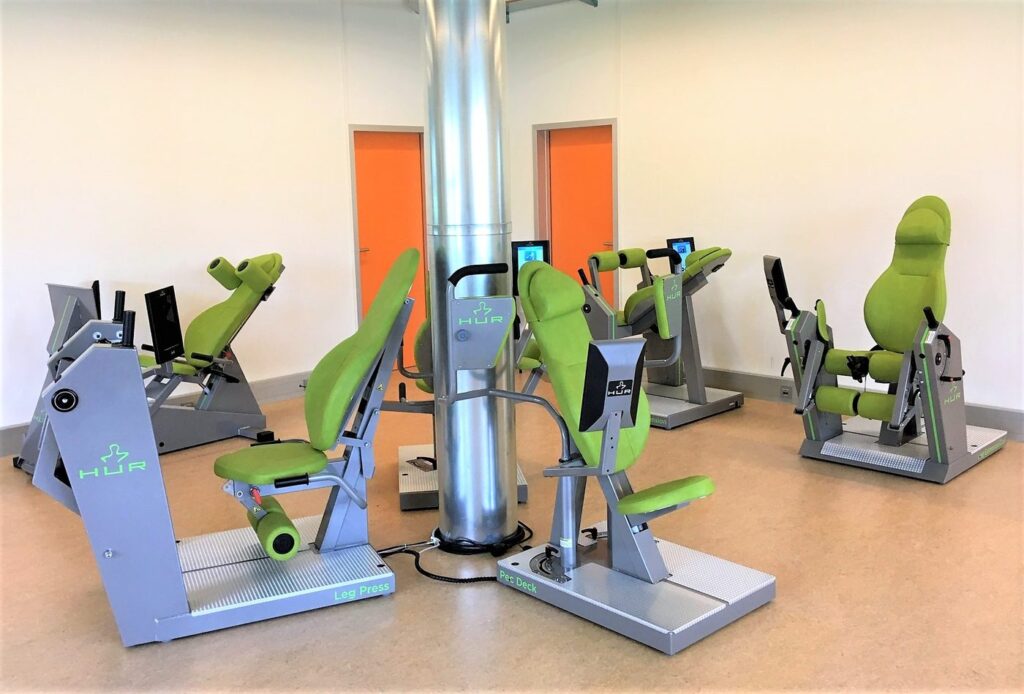
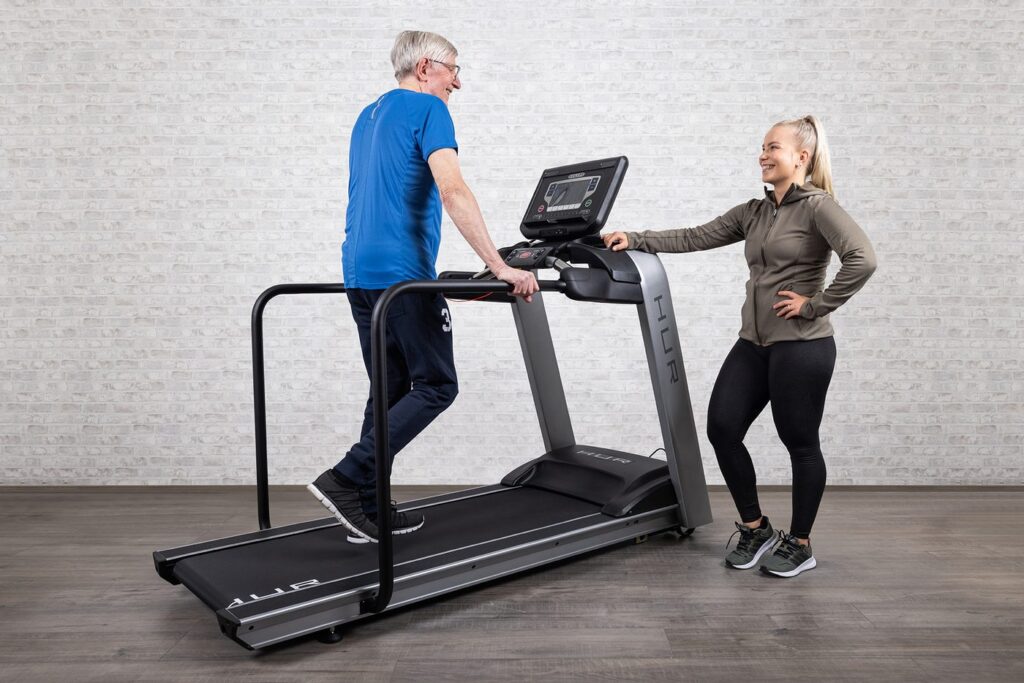

The goal of cancer care is not only to treat the disease: it is also to preserve physical function, independence and quality of life. More and more health teams see exercise in cancer care, strength training in particular, as part of the care pathway rather than an add-on.
Treatment can speed up muscle loss through inactivity, fatigue, changes in eating, inflammation and the direct effects of chemotherapy, radiotherapy or hormonal therapy. That loss is not always visible on the scales.
In this guide we explain why muscle matters, what changes at each stage and how a supervised exercise programme can be organised as a team.
In short
- Muscle is a physical and metabolic reserve: it helps people tolerate treatment and recover from surgery.
- Loss of muscle mass and strength can happen even when body weight is stable.
- Exercise adapts to each stage: before treatment, during treatment, recovery and survivorship.
- Progressive strength training is one of the most studied exercise types in oncology.
- The programme should be set and supervised by qualified professionals.
Why muscle matters
Strength and mobility
Muscle supports standing, walking, balance and climbing stairs: everyday independence. Preserving lower-body strength is especially important to reduce the risk of falls.
Physiological reserve
Skeletal muscle acts as a metabolic and protein reservoir during illness. More muscle mass gives the body more resources to tolerate treatment side effects, recover from surgery and respond well.
More than movement
Muscle is a metabolically active organ. When it is exercised it releases myokines, which contribute to anti-inflammatory effects across the body, beyond physical performance.
What can speed up muscle loss
Several factors at once
Inactivity, fatigue, eating difficulties, inflammation and the direct effects of chemotherapy, radiotherapy and hormonal therapies can, together or separately, reduce strength and muscle mass.
It is not always visible
Muscle loss can exist even when weight is stable or high. Assessing physical function, with grip strength, the chair-stand test and gait speed, helps identify who is at risk.
Effects on daily life
Less mobility, persistent fatigue, a higher risk of falls and more difficulty returning to work and social life. The consequences go well beyond the clinic.
Four moments, one goal
Exercise is not a single intervention: it evolves with the person and adjusts at every transition.
Before treatment
Prehabilitation builds physical capacity before surgery, chemotherapy or radiotherapy: assessing strength and frailty risk, preparing with adapted exercise and coordinating the teams.
During treatment
Maintain function, adapting exercise to symptoms, fatigue levels and the clinical status of each day.
Recovery
Restore the strength, mobility and daily-life capacity lost during treatment, with progressive, supervised exercise.
Survivorship
Sustain regular physical activity and long-term independence, with no gap in follow-up.
Why strength training
Among the types of exercise studied in oncology, progressive strength training is one of the most relevant for preserving and rebuilding muscle.
Preserve and rebuild strength
Progressive resistance exercise helps counter treatment-related muscle loss and improves physical performance.
Functional goals first
Rising from a chair, walking safely and climbing stairs are the basis of independence, and they respond well to targeted strength training.
Adapt to the individual
Exercise selection, load, volume and progression depend on each person's symptoms, treatment phase, functional capacity and other conditions.
How to put exercise in cancer care into practice
Three principles that help teams turn theory into routine.
Identify early
Referral pathways should capture people at risk of losing function, not only those who already show limitations. Assessing physical function at diagnosis is an important first step.
Work as a team
Oncology, surgery, nursing, physiotherapy, exercise physiology and nutrition collaborate with shared protocols. No single discipline holds all the answers.
Support participation
Information for the person, goals aligned with their priorities and continuity of contact, from prehabilitation through survivorship, sustain long-term engagement.
The environment matters too
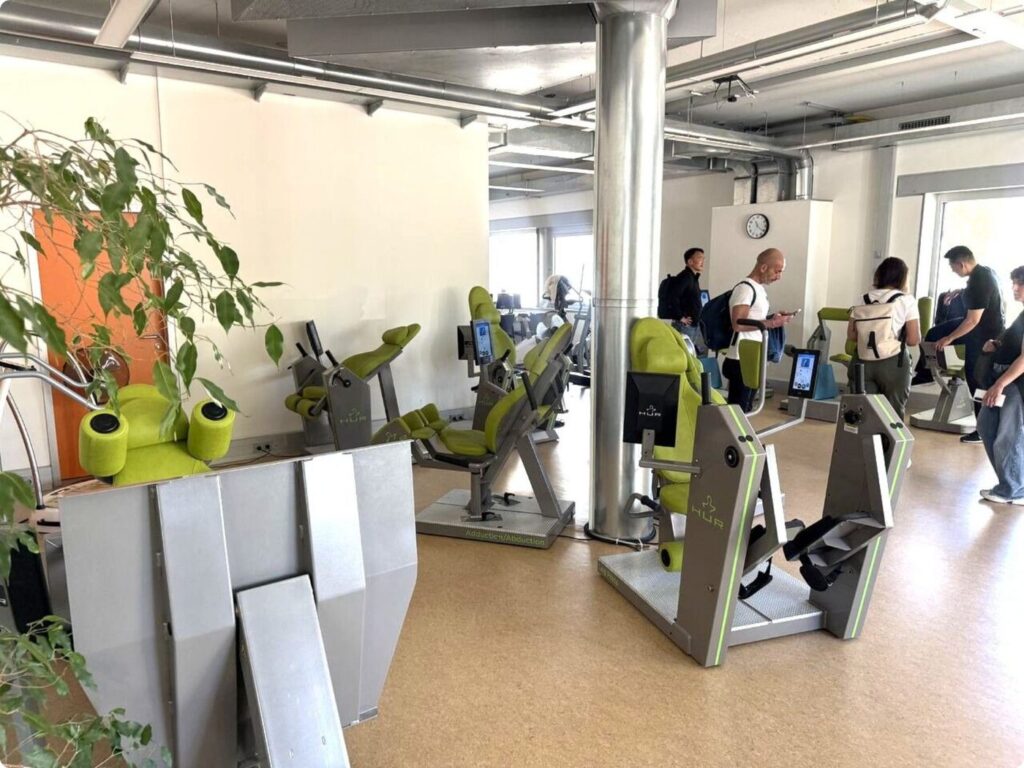
The space where exercise happens is not a detail. Natural light, open layouts and a less institutional atmosphere reduce psychological barriers to taking part. Exercise oncology centres such as NCT Heidelberg, in Germany, plan the room around patient flow, supervision sightlines and equipment accessibility.
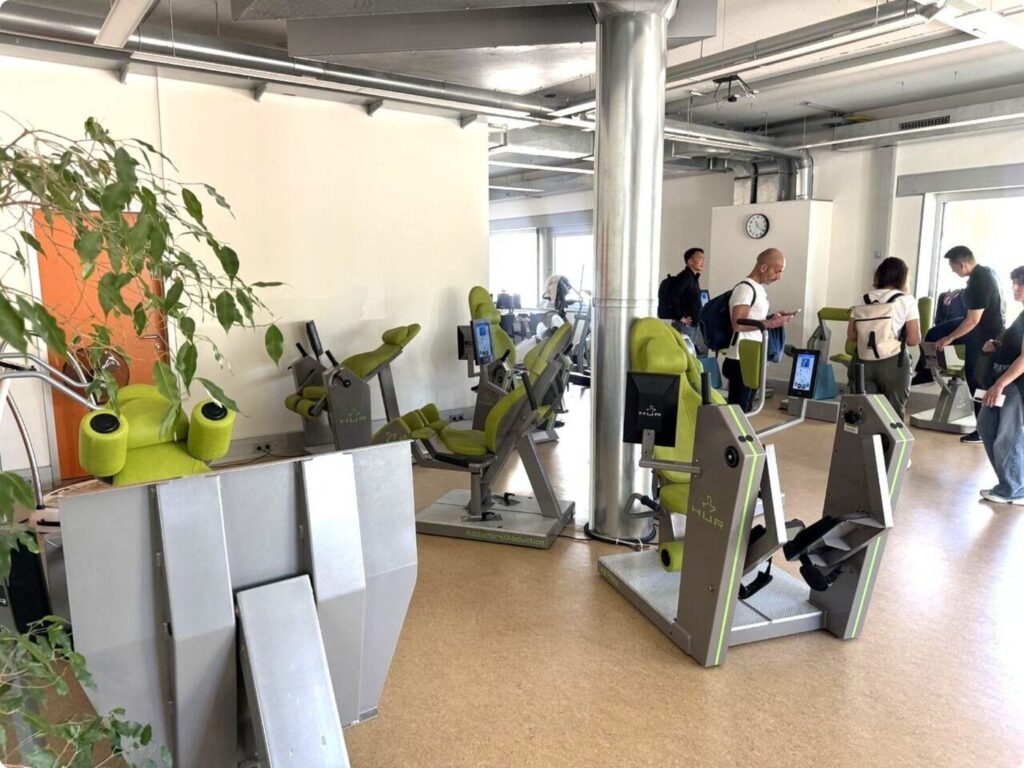

The NCT Heidelberg exercise room (left) and an illustrative 3D visualisation of the space planning (right).
Where technology helps
Technology should support the work of the people who supervise, never replace it. These are the features that help most in an exercise oncology service:
Pneumatic resistance
Smooth, friction-free loading with fine adjustment, useful for people with low baseline strength or pain sensitivity.
Accessible solutions
Equipment that serves from early post-surgical rehabilitation to higher-functioning survivors, in hospital or community settings.
Structured supervision
Session, load and progress records that support the clinical reasoning of the supervising professional, while assessment and safety stay in their hands.
When to talk to the healthcare team
- Before starting any exercise programme during or after treatment.
- If there is persistent fatigue or loss of strength.
- If rising from a chair, walking or climbing stairs becomes harder.
- If there are falls or a fear of falling.
- Before surgery, to see whether prehabilitation makes sense.
See how HUR supports exercise oncology

HUR in oncology
HUR develops pneumatic-resistance strength training equipment for geriatrics, rehabilitation and exercise oncology. See how the HUR solution can support prehabilitation, rehabilitation and survivorship, with examples of centres already using it.
View solution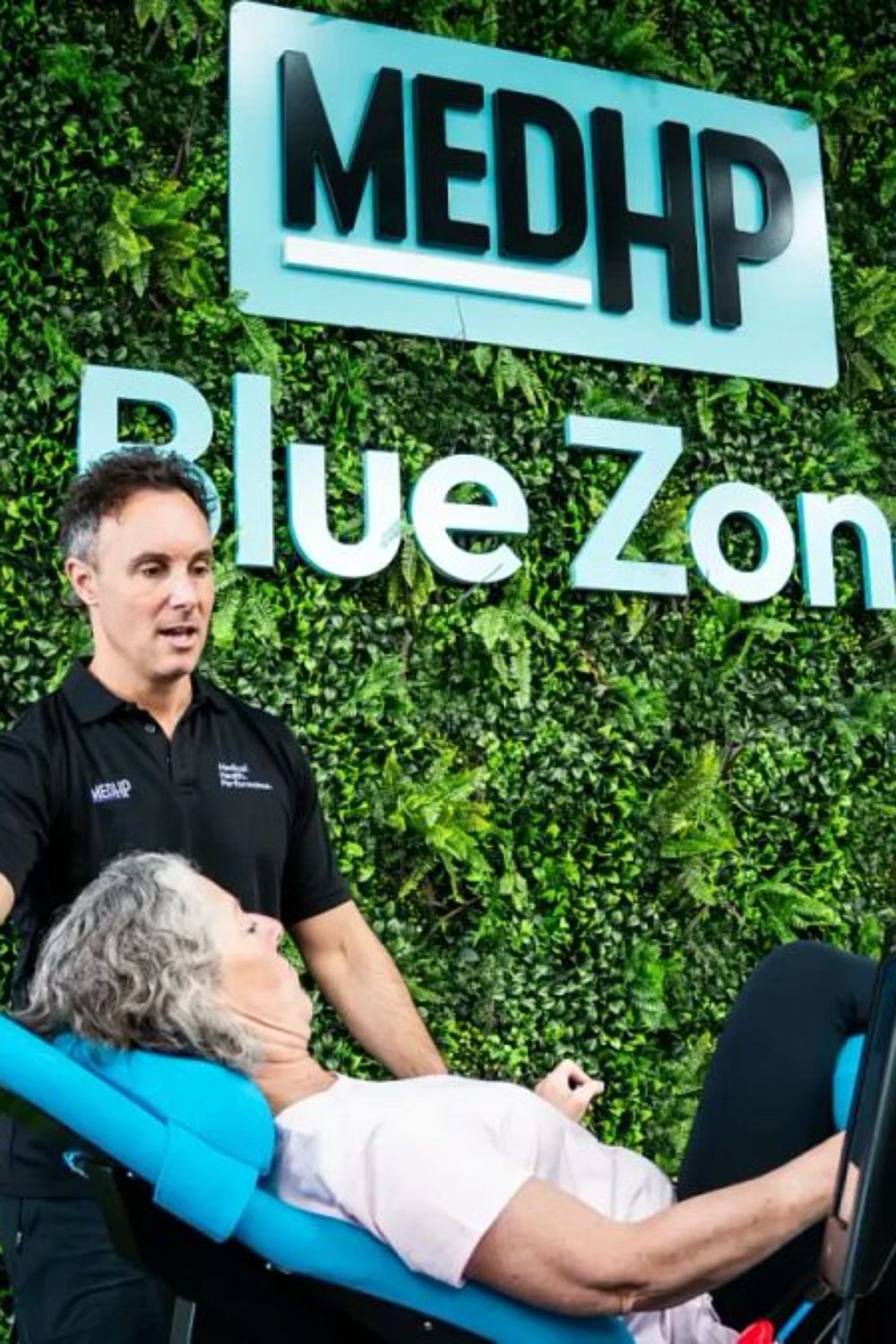
HUR
One technology for geriatrics, rehabilitation and oncology, with pneumatic resistance and progress tracking for each person.
Discover HURFrequently asked questions
Is exercise safe during cancer treatment?
It depends on each person. Exercise should be set and supervised by qualified professionals, based on clinical status, treatment phase and functional capacity.
What is prehabilitation?
It is the structured intervention delivered before cancer treatment, aiming to strengthen a person's physical and psychological reserves before surgery, chemotherapy or radiotherapy.
Why is there so much talk about strength training?
Because muscle is central to independence, balance and recovery, and progressive strength training is one of the most studied ways to preserve and rebuild it.
Who should supervise an exercise programme in oncology?
Rehabilitation and exercise professionals with the right training, working with the oncology team, adjusting the programme at every transition of the care pathway.
This guide is informational and does not replace the advice of the healthcare team. Exercise prescription for people affected by cancer must be developed and adapted by qualified professionals according to each person's clinical status, treatment phase and functional capacity. Content based on HUR's educational material on exercise oncology (ISEO 2026).
Related articles
 Sem categoriaPeripheral magnetic stimulation: pain, recovery and performanceNovember 13, 2026 · 5 min read
 Sem categoriaShock wave therapy in physiotherapy: what it is, what it treats and the advantages for clinicsNovember 11, 2026 · 7 min read
 Sem categoriaCryotherapy, red light and oxygen: what science suggests for aesthetics, longevity and recoveryNovember 10, 2026 · 7 min read