
Shock wave therapy in physiotherapy: what it is, what it treats and the advantages for clinics
A guide for patients and professionals, based on the EMS scientific library
Shock wave therapy in physiotherapy is a non-invasive way to treat pain and injuries of tendons, muscles and fasciae. In this guide we explain what it is, what it treats, which problems it solves for patients and why it is an advantageous technology for physiotherapists and clinics.
The information is based on the scientific library of EMS, the Swiss manufacturer of the DolorClast devices, and the studies cited there.

In short
- High-energy acoustic impulses applied over the skin, without surgery or needles.
- They can be radial (superficial and large areas) or focused (deep structures and bone).
- They are used for tendinopathies, plantar fasciitis, myofascial pain, adhesive capsulitis and sports injuries, among others.
- According to EMS, they relieve pain, treat inflammation and stimulate healing.
- For the clinic: short sessions, guided protocols and one more differentiating service.
What is shock wave therapy?
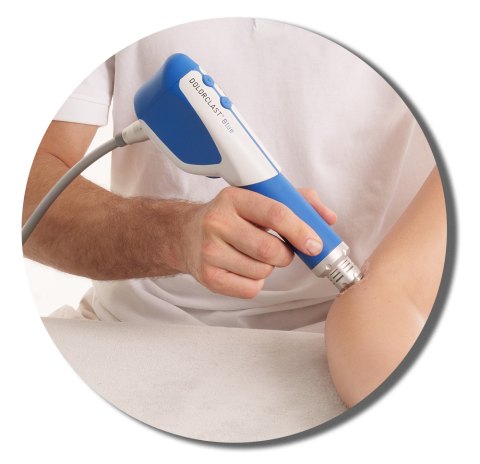
Shock waves are high-pressure acoustic waves generated outside the body (extracorporeal) and transmitted to the tissues through a handpiece. Each wave has two phases: a compression phase that builds pressure and a decompression phase that creates cavitation microbubbles. According to EMS, this mechanical effect activates biological responses in the tissues.

Radial waves
Generated by compressed air, which propels a projectile against an applicator. According to EMS, they reach 4 cm and are ideal for superficial conditions and large areas.
Focused waves
Generated with piezoelectric technology, they concentrate energy on a point and reach deeper structures, up to the bone.
What it treats: the problems it solves for patients
According to EMS, shock waves act on three fronts: they relieve pain (by inhibiting the release of substance P), treat inflammation (by reducing prostaglandin E2) and stimulate healing (angiogenesis and tissue repair). These effects translate into answers to very common problems:
Tendinopathies
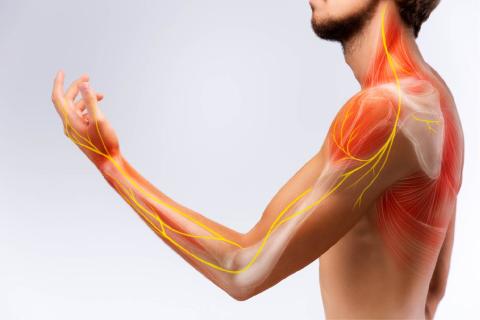
Persistent pain in the Achilles tendon, the knee (patellar tendon) or the shoulder (rotator cuff).
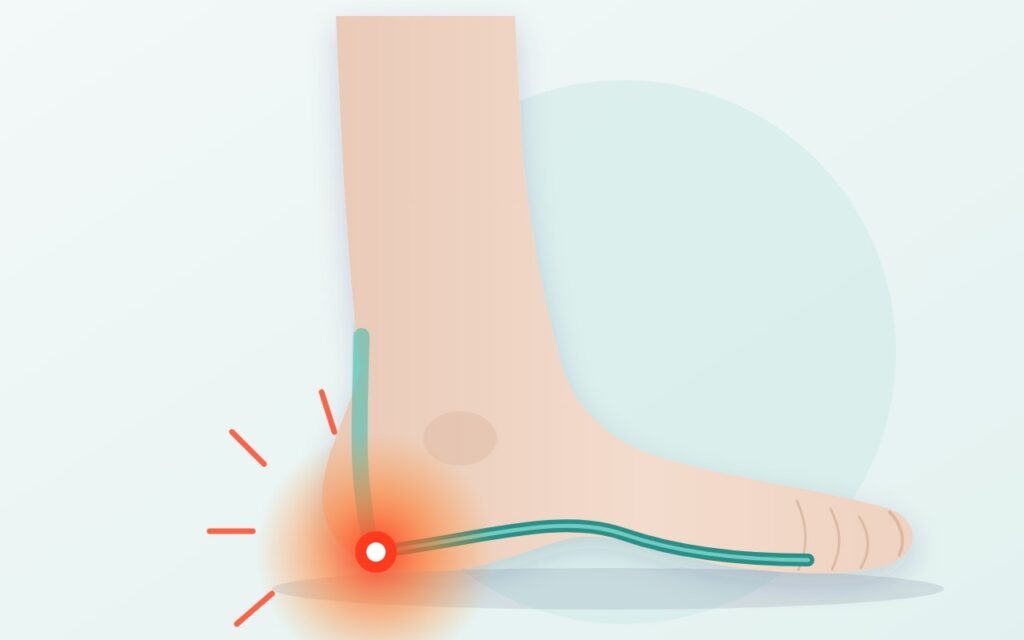
Plantar fasciitis
Heel pain on getting up or walking.
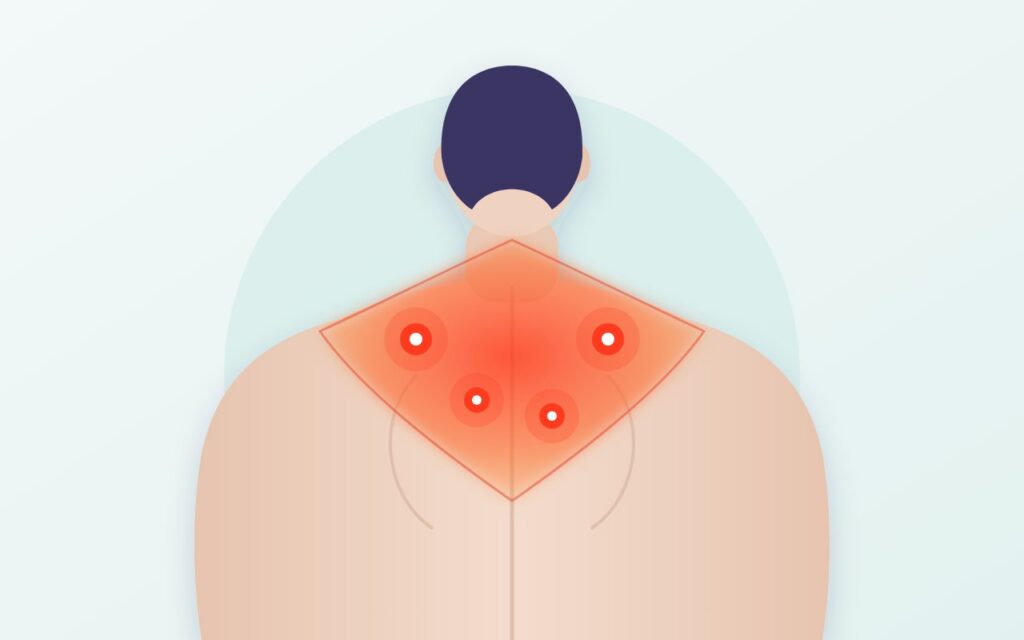
Myofascial pain and trigger points
Painful muscle knots in the neck, shoulder or back.
Lateral epicondylosis and adhesive capsulitis
Elbow pain and a painfully stiff shoulder.
Sports and post-surgical injuries
Recovery from muscle injuries and support for rehabilitation.
Spasticity
Muscle stiffness in a neurological context.
List of applications according to EMS; the indication depends on each patient's clinical assessment.
What the research says
The EMS scientific library brings together clinical trials and basic science studies. Here are some examples:
Lateral epicondylosis (Yang, 2017)
Randomised trial with DolorClast Radial Shock Waves: significant differences versus control at 6, 12 and 24 weeks in pain and disability, and in grip strength at 12 and 24 weeks.
Adhesive capsulitis (Hussein and Donatelli, 2015)
Double-blind placebo-controlled trial: improved function, pain and mobility, maintained for at least 24 weeks, combined with home exercises.
Trigger points (Suputtitada, 2022)
Randomised trial: shock waves reduced pain and improved flexibility; lidocaine injections gave faster short-term relief, but results were similar at 4 weeks.
Elite football (Morgan, 2021)
Shorter lay-off time after treating acute muscle injuries with radial shock waves.
ACL reconstruction (Song, 2024)
With radial waves added to rehabilitation, faster recovery, with less pain and better knee movement in the first weeks; at six months results were similar to standard rehabilitation.
Basic science (Hochstrasser, 2016; Shah, 2008)
Shock waves have dose-dependent effects and stimulate fibroblast proliferation; trigger points contain high levels of substance P.
Studies refer to the protocols and conditions of each paper. Results may vary from patient to patient.
Why it is an advantageous technology for physiotherapists and clinics
Beyond the clinical benefit, shock waves bring practical and commercial advantages to a physiotherapy clinic:
Short, non-invasive sessions
Quick treatments, with no anaesthesia or downtime, that fit well in the diary.
Guided protocols
Guided DolorClast Therapy gives the therapist preset modes and protocols that shorten the learning curve.
Patient comfort
Modes such as Analgesic and Ramp-Up adjust energy to tolerance, and piezoelectric technology is quiet.
Patients who understand the treatment
The devices let you show videos and treatment images, which strengthens adherence.
A differentiating service
It answers frequent conditions clinics see every day, such as tendinopathies and plantar fasciitis.
A complement to rehabilitation
It combines with exercise and manual therapy, and with the high power laser in GDT.
What is a session like?
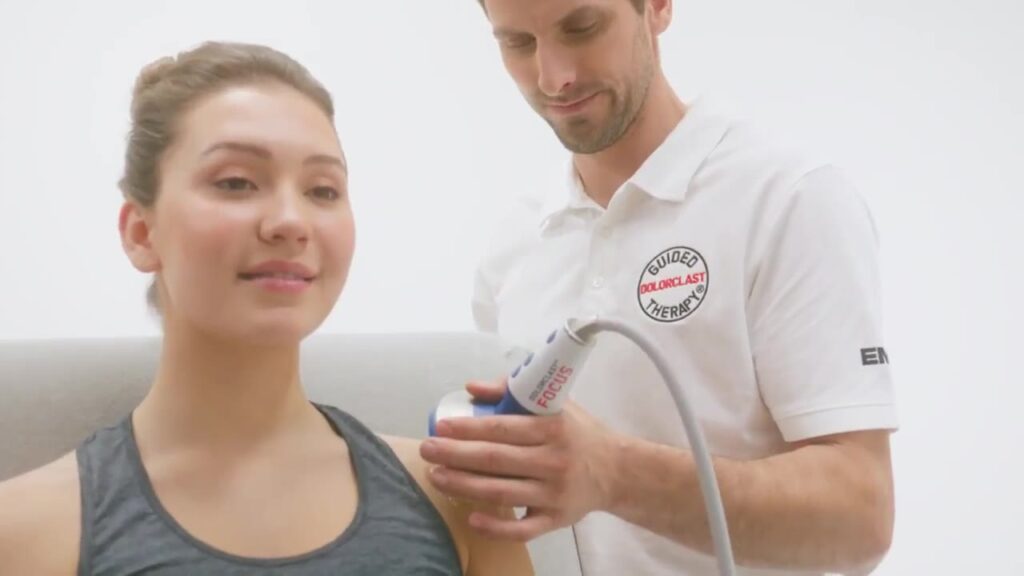
The professional assesses the patient, chooses the technology and protocol, and applies the handpiece to the area to treat, with contact gel. With radial waves, energy is raised progressively up to the maximum the patient tolerates. In each protocol, the number of impulses, the frequency and the interval between sessions are set by the professional.
Duration
Short sessions, usually a few minutes per area, depending on the protocol.
Tolerance
There may be discomfort during treatment; the device modes help manage it.
When to see a professional
- Persistent pain in a tendon, heel, elbow or shoulder.
- A sports injury that does not improve with rest.
- Localised muscle pain that keeps coming back.
- Before starting any treatment, to confirm it is right for your case.
EMS solutions for your clinic
See the DolorClast technologies available.

Radial shock waves
Swiss DolorClast Master, Smart 20 and DolorClast Radial Shock Waves: high energy, 3 modes and up to 25 Hz.
View solution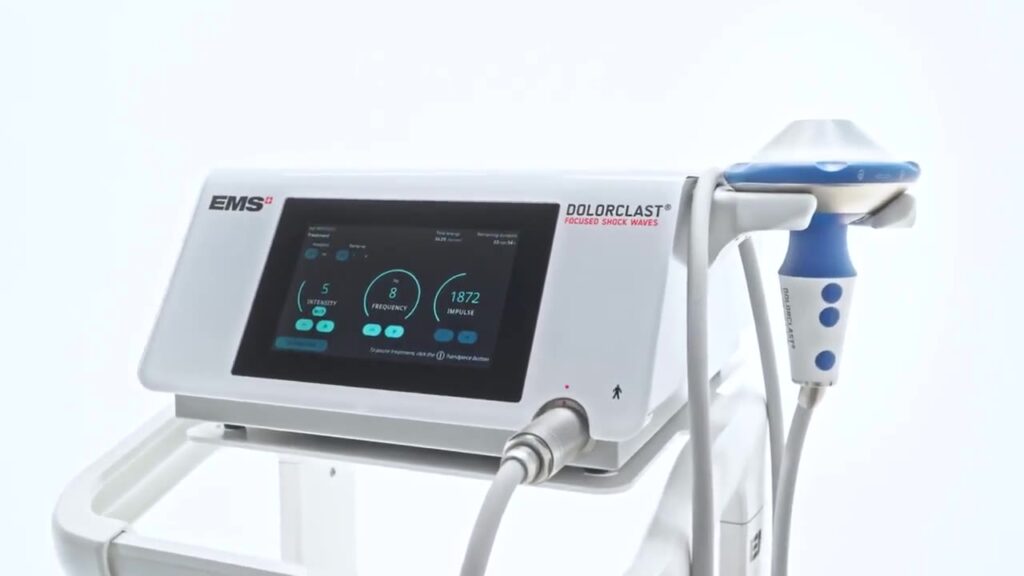
Focused shock waves
Swiss PiezoClast, DolorClast Focused Shock Waves and Swiss DuoClast: precise focus, piezoelectric technology.
View solutionFrequently asked questions
Does shock wave therapy hurt?
There may be discomfort during treatment. The device has modes that adjust energy to the patient's tolerance.
How many sessions are needed?
It depends on the condition and the protocol. In the studies cited, protocols were, for example, one session a week for several weeks.
Who can apply shock waves?
Healthcare professionals with appropriate training, such as physiotherapists and doctors.
Are there contraindications?
Yes. They are listed in the instructions for use of each device and must be confirmed by the professional before treatment.
Do shock waves replace rehabilitation?
No. They complement the rehabilitation programme defined by the physiotherapist or doctor.
References
- Yang TH, Huang YC, Lau YC, Wang LY. Efficacy of radial extracorporeal shock wave therapy on lateral epicondylosis, and changes in the common extensor tendon stiffness with pretherapy and posttherapy in real-time sonoelastography: a randomized controlled study. Am J Phys Med Rehabil. 2017. doi:10.1097/PHM.0000000000000547
- Hussein AZ, Donatelli RA. The efficacy of radial extracorporeal shockwave therapy in shoulder adhesive capsulitis: a prospective, randomised, double-blind, placebo-controlled, clinical study. Eur J Physiother. 2015. doi:10.3109/21679169.2015.1119887
- Suputtitada A, Chen CPC, Ngamrungsiri N, Schmitz C. Effects of repeated injection of 1% lidocaine vs. radial extracorporeal shock wave therapy for treating myofascial trigger points: a randomized controlled trial. Medicina. 2022. doi:10.3390/medicina58040479
- Morgan JPM, Hamm M, Schmitz C, Brem MH. Return to play after treating acute muscle injuries in elite football players with radial extracorporeal shock wave therapy. J Orthop Surg Res. 2021. doi:10.1186/s13018-021-02853-0
- Song Y, Che X, Wang Z, Li M, Zhang R, Wang D, Shi Q. A randomized trial of treatment for anterior cruciate ligament reconstruction by radial extracorporeal shock wave therapy. BMC Musculoskelet Disord. 2024. doi:10.1186/s12891-024-07177-8
- Hochstrasser T, Frank HG, Schmitz C. Dose-dependent and cell type-specific cell death and proliferation following in vitro exposure to radial extracorporeal shock waves. Sci Rep. 2016.
- Shah JP, Gilliams EA. Uncovering the biochemical milieu of myofascial trigger points using in vivo microdialysis. J Bodyw Mov Ther. 2008.
EMS scientific library (ems-dolorclast.com). General information that does not replace medical advice.
Related articles
 Sem categoriaCryotherapy, red light and oxygen: what science suggests for aesthetics, longevity and recoveryNovember 10, 2026 · 7 min read
 Sem categoriaMuscle decompression: what it is, how it works and when to use itNovember 7, 2026 · 5 min read
 Sem categoriaWinback Tecar therapy in the treatment of carpal tunnel syndromeNovember 5, 2026 · 3 min read