
Flywheel training for physiotherapy and clinics
Flywheel exercise and movement assessment, with the same numbers every session
A load the patient controls
In physiotherapy, flywheel resistance is the patient’s own effort, so it starts as low as they need. There is no weight to lift into place or drop, and the clinician adjusts the feel of the load by changing the disc.
Force, power and speed show on every repetition, so the clinician and the patient see the same numbers from one session to the next. The MED editions are made for clinics and physiotherapy practices.
- V.MINI MED
- E.MINI MED
- E.BOARD LARGE
- Data every session
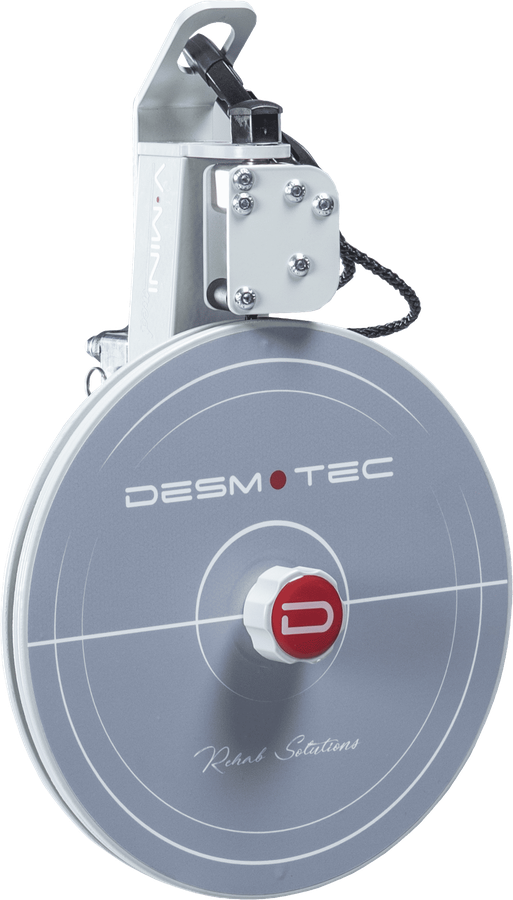
V.MINI MED
Flywheel exercise
White edition of the V.MINI with a wallbar attachment, electronics upgrade and the Desmotec Connect app with one month free. The clinician chooses and supervises the exercise; the device provides the resistance and the measurements.
- Mounts on wooden wall bars
- Desmotec states it is a certified medical device
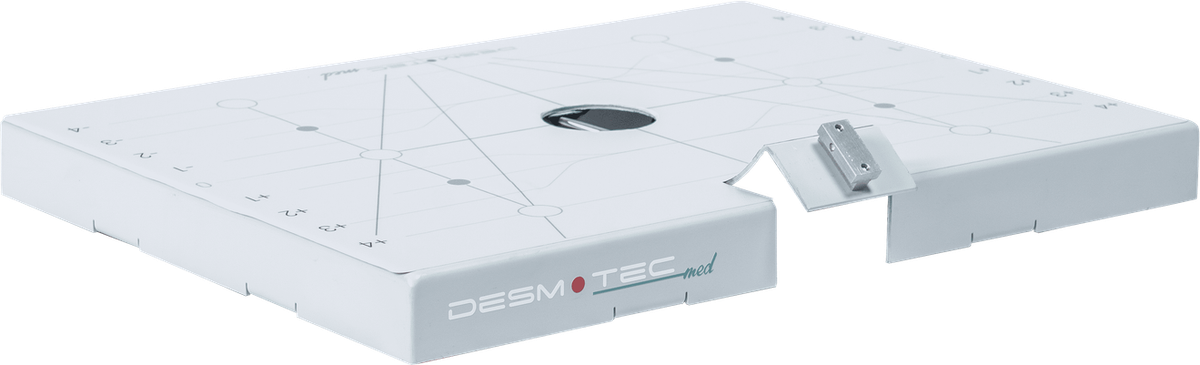
E.MINI MED
Movement assessment
Compact assessment platform for clinics and physiotherapy practices, with four E.LOAD cells measuring force and balance, a tablet with desk stand and D.SOFT for five years.
- Choose a test, see the result on the tablet and compare it with the next session
- Used together with the V.MINI MED
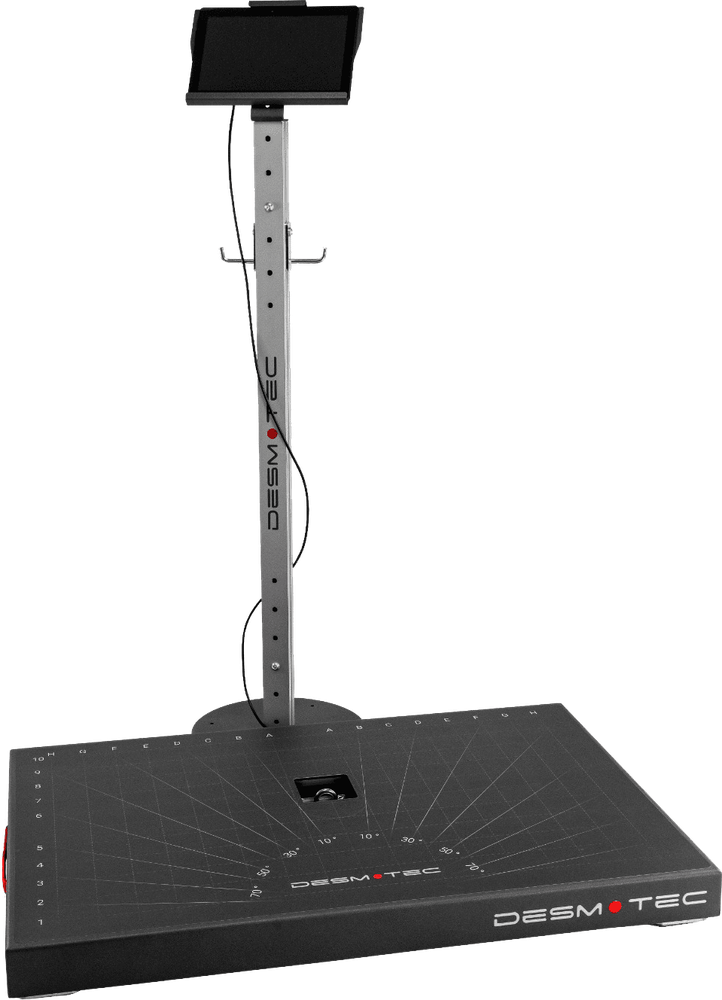
E.BOARD LARGE
Force and balance with an isometric kit
Assessment platform with four E.LOAD cells for standing and isometric force and balance tests, with a tablet, stand and isometric kit (belt, double handle and two carabiners).
- D.SOFT licence sold separately
E.BOARD in action
Official manufacturer video.
Exercise and assessment in one place
E.MINI MED and V.MINI MED are separate devices that can be used together: the patient exercises on the flywheel while standing on the assessment platform.
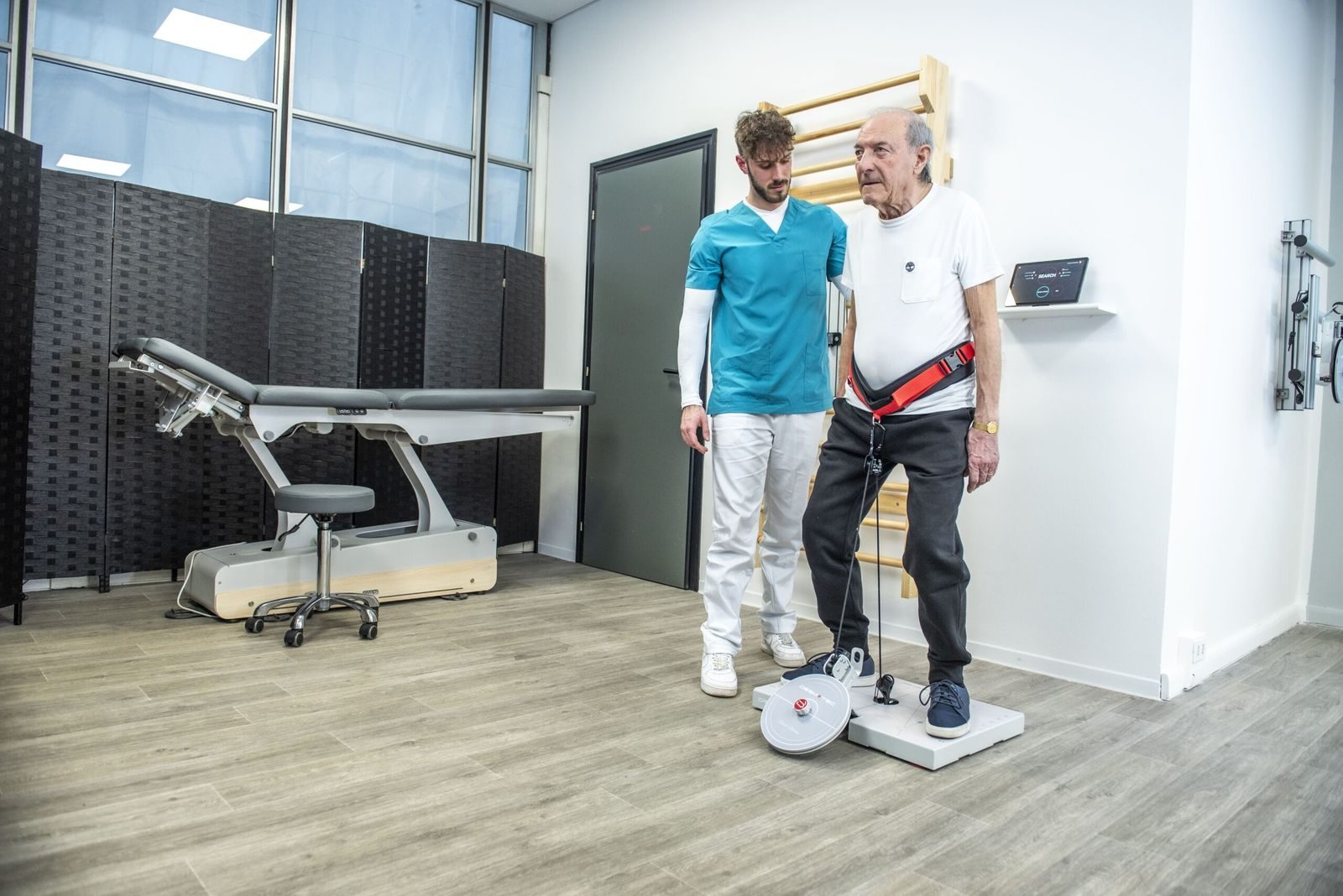
E.MINI MED and V.MINI MED together
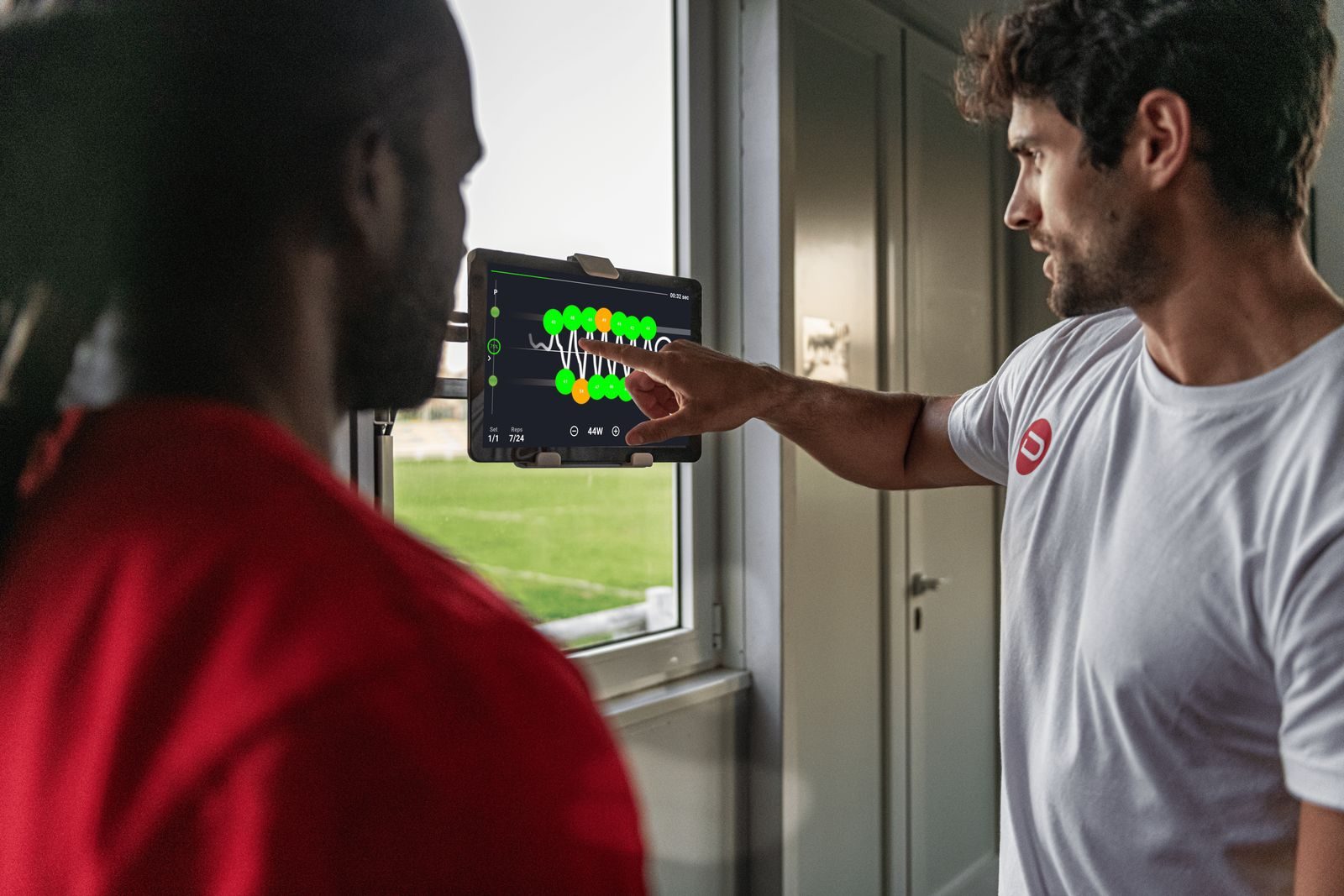
The same numbers for clinician and patient
How it fits in the clinic
Four reasons, according to the manufacturer.
- 01
Clinician-led
You choose and supervise the exercise; the device provides the resistance and the measurements.
- 02
Gradual introduction
Patients need a few sessions to learn the movement. Start with a light disc and submaximal effort.
- 03
Numbers every session
Force, power and speed show on every repetition, so clinician and patient can see progress.
- 04
Training for your team
The Desmotec Academy offers training in device setup, exercise selection and coaching. Ask us how to access it.
A randomised clinical trial published in 2025 and cited by Desmotec, in patients three weeks after ACL reconstruction, compared six weeks of conventional rehabilitation with and without isoinertial training on a Desmotec ergometer. The isoinertial group gained significantly more eccentric power (p = 0.0001). Source: Patra et al., 2025.
Frequently asked questions
How do I introduce a patient to flywheel training?
Gradually: the patient needs a few sessions to learn the movement. Start with a light disc and submaximal effort; the resistance is the patient’s own effort.
Can I exercise and assess at the same time?
Yes. E.MINI MED and V.MINI MED are separate devices that can be used together: the patient exercises on the flywheel while standing on the assessment platform.
Are the MED devices medical devices?
Desmotec states that the V.MINI MED and E.MINI MED are certified medical devices, for use in clinics and physiotherapy practices. Ask Sausport for the documentation that applies to your case.
Does the E.MINI MED come with software?
Yes: it comes with D.SOFT, free for five years, on a tablet with a desk stand.
How much does it cost and how do I order?
The cost depends on the devices and the software. Request a quote from Sausport, with no obligation; technical support is provided by the Sausport team.