
EMS Swiss DolorClast shock wave therapy
Radial and focused shock waves, high power laser and guided therapy for physiotherapy and sports medicine

EMS Swiss DolorClast: Swiss shock wave devices for the treatment of musculoskeletal conditions, with training and support from Sausport. EMS (Electro Medical Systems, Nyon, Switzerland) created the first pneumatic-ballistic radial shock wave system in 1997 and is the company behind Guided DolorClast Therapy.
Shock wave therapy for clinics that want results and patients who get moving again
Extracorporeal shock wave therapy is now one of the most sought-after technologies in physiotherapy clinics, clubs and sports medicine: non-invasive treatment, short sessions and a response that patients feel. EMS brings together, in the DolorClast range, radial shock waves, focused shock waves and high power laser, to cover everything from superficial injuries to deep conditions.
Every device is part of Guided DolorClast Therapy (GDT), an evidence-based clinical method that guides the therapist to apply the right energy dose, with preset protocols, modes that respect patient tolerance, and training.
- Inventors of radial shock waves (1997)
- Swiss quality
- Radial, focused and laser
- Guided protocols
EMS data.
Three technologies, one approach
Each technology has its own role. Combined in Guided DolorClast Therapy, they cover a wide range of acute and chronic conditions.
Radial shock waves
High energy per impulse for superficial and chronic conditions, tendons, muscles and large areas, up to 25 Hz.
Focused shock waves
Concentrated energy with piezoelectric technology for deep and bone conditions, with a precise focus and comfort.
High power laser
905 nm light for an analgesic and anti-inflammatory effect in superficial or deep conditions, including the acute phase.
EMS solutions
Choose a technology to see its features, models and frequently asked questions.

Radial shock waves
Swiss DolorClast Master, Smart 20 and DolorClast Radial Shock Waves: high energy, 3 modes and up to 25 Hz.
View solution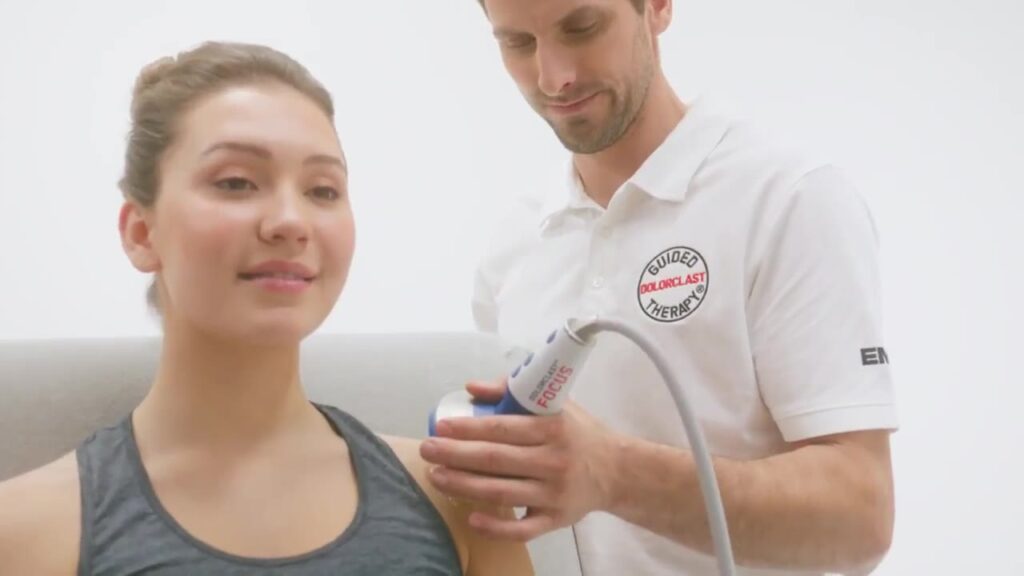
Focused shock waves
Swiss PiezoClast, DolorClast Focused Shock Waves and Swiss DuoClast: precise focus, piezoelectric technology.
View solution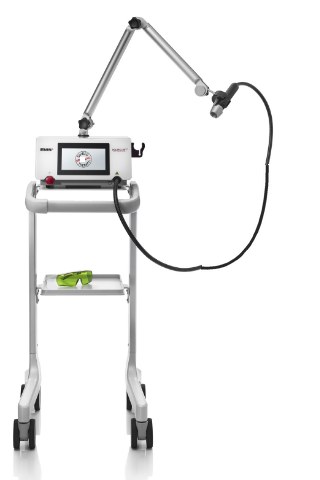
High power laser
905 nm pulsed laser with 300 W peak power, for acute pain and inflammation.
View solution
Guided DolorClast Therapy
The EMS clinical method: assess, apply the right energy dose and follow the recovery.
View solution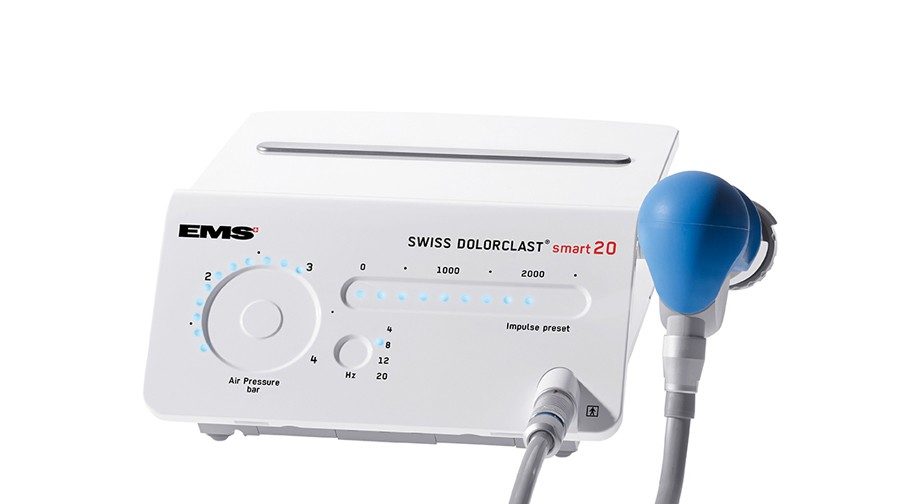
Clinical applications
Tendinopathies, plantar fasciitis, myofascial pain, spasticity, sports injuries and more.
View solutionSee the DolorClast Focused Shock Waves in action
Touchscreen, preset protocols and a focused handpiece with built-in controls.
Guided DolorClast Therapy: three effects to unlock recovery
According to EMS, natural healing is blocked by the interaction between pain and inflammation. GDT acts on both and stimulates repair.
- 01
Relieve pain
According to EMS, shock waves inhibit the release of substance P and suppress pain signals to the central nervous system, with an analgesic effect after about 5 minutes of treatment.
- 02
Treat inflammation
They reduce neurogenic inflammation and the amount of prostaglandin E2 (PGE2), a mediator of acute inflammation.
- 03
Stimulate natural healing
They improve angiogenesis and circulation and stimulate the repair of muscle, tendon, cartilage and bone.
Technology
High-energy devices created by the inventors of radial shock waves.
Education
Training to apply the right dose with the right protocols.
Clinical evidence
A scientific library with clinical and basic science studies.
For which professionals and spaces
The same technology, adapted to different types of service.
- 01
Physiotherapy clinics
One more way to treat tendinopathies, plantar fasciitis and myofascial pain, with short sessions and guided protocols that the team learns quickly.
- 02
Sports medicine and clubs
Support for treating muscle and tendon injuries and for return to play, with portable devices that travel with the team.
- 03
Orthopaedics and physiatry
Non-invasive technology for chronic musculoskeletal conditions, complementing the rehabilitation programme.
- 04
Pain management centres
Pain relief with an analgesic and anti-inflammatory effect, including for patients with low tolerance, thanks to the treatment modes.
- 05
Post-surgical rehabilitation
Support for soft tissue and bone recovery, in line with the doctor's and physiotherapist's plan.
- 06
Performance centres
Faster recovery of large muscle areas and fasciae between training and competition.
More than a device
Sausport supports your clinic before, during and after the purchase.
- 01
Advice
We help you choose the right technology and configuration for your clinic and patient population.
- 02
Training
Team training within Guided DolorClast Therapy and the Sausport academy.
- 03
Technical service
In-house technical service to keep your device available.
- 04
Patient material
The devices let you show the patient videos and images of the treatment, which helps adherence.
Research behind the technology
A selection from the EMS scientific library.
Yang et al. (2017): with DolorClast radial shock waves, there were significant differences versus the control group at 6, 12 and 24 weeks in pain (VAS) and disability (DASH), and in grip strength at 12 and 24 weeks.
Hussein and Donatelli: improved shoulder function, pain and mobility, maintained for at least 24 weeks, combined with home exercises.
Morgan et al. (2021): in professional players treated with DolorClast Radial Shock Waves, lay-off time was reduced.
Selected studies from the EMS scientific library. Results refer to the conditions, devices and protocols of each study.
Guide: shock wave therapy in physiotherapy
Shock wave therapy in physiotherapy is a non-invasive way to treat pain and injuries of tendons, muscles and fasciae. In this guide we explain what it is, what it treats, which problems it solves for patients and why it is an advantageous technology for physiotherapists and clinics.
Read the guide Download the Guided DolorClast Therapy brochure (PDF)Frequently asked questions
What is shock wave therapy in physiotherapy?
It uses high-energy acoustic impulses applied over the skin, non-invasively, to treat musculoskeletal conditions. They can be radial or focused. Read more in our guide to shock wave therapy in physiotherapy.
What is the difference between radial and focused shock waves?
Radial waves, generated pneumatically, suit superficial conditions and large areas; focused waves, generated with piezoelectric technology, concentrate energy on a point and reach deeper structures and bone.
Does Sausport supply the EMS Swiss DolorClast devices?
Yes. Sausport presents the EMS Swiss DolorClast range to physiotherapy, sports medicine and pain management clinics, with advice, training and technical service. Use the contact form at the end of the page.
What is Guided DolorClast Therapy (GDT)?
It is the EMS clinical application of high-energy therapies: assess the patient, deliver the highest energy dose they can safely tolerate and use the right applicators and frequencies.
Do the devices require training?
Yes. EMS treats education as one of the three pillars of the method, and Sausport can help organise training for your team.
How do I request information or a proposal?
Use the «Request a quote» button at the end of this page. Tell us what you are looking for and we will get back to you very quickly. If you prefer, call +351 220 135 613 or email info@sausport.com.
Learn more about EMS
One page per technology, with features, frequently asked questions and studies.
 Radial shock wavesDolorClast radial shock waves, up to 25 Hz, for tendinopathies.
 Focused shock wavesPiezoelectric focused shock waves for deep conditions.
 High power laserHigh-power laser, 905 nm and 300 W peak power.
 Guided DolorClast TherapyMethod combining radial and focused shock waves with laser.
 Clinical applicationsTendinopathies, plantar fasciitis, myofascial pain and spasticity.
 Guide: shock wave therapy in physiotherapyGuide: what shock waves are and which problems they address.